kokomo

One of my many moral failings is that I am always on the lookout for books and movies that speak to me at a personal level—I have no doubt that this is a generic human tendency exacerbated by whatever milieu of modernity is being served to us at the moment, but it is one that I display quite extensively. Call it the autofiction disease. In my ideal world we would all be listening to oral recitations of the Odyssey and be fascinated not by Odysseus’s relationship to the self but rather by the sheer entertainment value of how he tricks the cyclops.
But then I suppose that the entire appeal of the arc with the Sirens is not merely to entertain, but to establish a connection between the reader and Odysseus—the particular strain of narcissism that Odysseus displays in his attempt to listen to the Siren song is the exact same one that makes the story compelling; the objet a here, of course, being your own desire to be strapped to a mast and discover your own mortal sin. More fun than actually listening to the story is your later rumination on what the Sirens would have bode for you.
A surprisingly morbid tendency, but it is the same one that makes me really like Nick Hornby’s novel (and the corresponding movie) High Fidelity.
I have been thinking about High Fidelity with some frequency recently, though what I’ve been thinking about doesn’t really have much to do with the previous discussion. In general, I’m not really a “fan” of this book/movie—the key nature of what it’s delivering isn’t something that appeals to me all that much, though I would forgive myself for thinking that it does. I mostly like it because the protagonist’s music taste is similar to mine.
And there’s also this line:
Do I listen to pop music because I'm miserable or am I miserable because listen to pop music?
I like this line because it endorses my cyclical theory of cause—are you looking into the void, or is the void looking back at you?
What I’m saying sounds pretentious, but I’m pointing out the obvious fact that if you gravitate towards a certain something, then that something appeals to a certain manner of person that you are, as well, and in order to appeal to you it must inherently be something that reinforces whatever predisposition attracts you to it in the first place.
the beach boys
The fact that happy pop music has the ability to make people miserable is really just a reflection of how heightened it is in terms of whatever it evokes. I, of course, listen to a lot of pop music—and being the kind of person who is very easily compelled by compelling things, I am often quite miserable because of pop music. Fortunately I do have some amount of schadenfreude for my own miserable self. I mean, it’s one thing to feel sad listening to Mount Eerie’s A Crow Looked at Me, for instance, which is specifically designed to make you cry, but it’s another altogether to sulk after listening to the Beach Boys for a couple hours. The Beach Boys are one of those bands which cause me to be immediately mistrustful of anyone who doesn’t like them—what do you mean, you don’t like surfing, ocean waves, beaches, California, falling in love? It’s obviously possible to hate all these things, of course, but such hate must extend to the actual pragmatisms of surfing—maybe you hate stepping into the water, for instance, or maybe you have a bone to pick with whatever economic drain Californians cause when they inevitably gentrify your neighborhood, but surely it’s not possible to hate the actual image of these things, right? The sheer concept of people lying around on sand and chilling, ignoring the logistics of actually washing it off your feet, or actually attempting to find a place to spread your bath towel? This isn’t just great imagery, it’s the best—and the Beach Boys, God bless them, are all about imagery.
And, I mean, yeah, after listening to the Beach Boys for a bit my reaction is always something to the effect of: good for them, but also screw them because they seem to be having a hell of a lot better a time than I am.
So anyway, the point is I’ve been listening to Kokomo a lot, which I hope you’ll forgive me for—I like the Boys but I’m not really an aficionado besides some passing knowledge of the recording of Pet Sounds and SMiLE, and I had no idea that this particular song was written for the 1988 Tom Cruise film Cocktail and had no involvement of Brian Wilson at all. I don’t know if the latter fact precludes it from being a ‘real’ Beach Boys single, or whatever, but it’s certainly one of my favorite songs.

There are a couple key aspects here that makes it so good. Very briefly, the song proceeds in the manner of a typical Beach Boys protagonist (a romantic surfer, usually) listing out the variety of places he would like to take his lover.
Aruba, Jamaica, ooh, I wanna take ya
Bermuda, Bahama, come on pretty mama
Key Largo, Montego
Baby, why don't we go?
Jamaica
Problem (a) is that I genuinely cannot think of a better list of places to visit, period. Like, his first two names are Aruba and Jamaica—that’s already hard to beat, and by the time he’s mentioned Key Largo, it’s over for anyone attempting to make an alternate list. This in itself is thus far an earworm of a chant because it’s so vivid—Mike Love doesn’t even attempt to use actual words to evoke pretty imagery, rather opting simply to list down holiday destinations. This is generally lazy. But in pop music this is precisely what you’re supposed to do—since pop music is intended to communicate the most visceral of emotions its not a problem so much as a strength to be able to maintain a certain giddy simplicity. Take the next few lines:
We'll put out to sea
And we'll perfect our chemistry
By and by we'll defy
A little bit of gravity
Afternoon delight
Cocktails and moonlit nights
That dreamy look in your eye
Give me a tropical contact high
Way down in Kokomo
Like, yeah, that sounds like a great idea. We should be doing that. We should be down in Kokomo, like, right now.
The previous verse was less lazy than just listing down destinations, but it’s still a list, of sorts—here’s all the things things that’re going to be going on when we’re in Kokomo, and he paints a picture of the single most captivating group of seaside activities it’s possible to partake in. That’s what I mean by pop music making people miserable—the average seaside experience is not really close to whatever Love is describing here (which is, crudely, the greatest thing ever), so it’s inherently reinforcing the misery when you compare these larger-than-life experiences with your own; on one hand the song is reminding you of all the possibilities in life, while on the other it’s also giving you a run-through of the kind of things you haven’t experienced, either.
The verse above reminds me of Girls Like Me by Slayyyter, who I incidentally went to middle school with:
Martinis at the bar
Kissing in the back of your car
Love on the radio
Hoping you're gonna take me home
It’s a bit less sophisticated, but it’s still a very suggestive group of activities simply listed out one after the other. This is a common conceit that’s used in pop music, but it’s so good: the fact that these lyrics are so unsubtle is precisely what what causes them to be so riveting. The particular examples I’m giving here are also pretty externally unsubtle. There’s not really a meaningful sense of interiority on part of the singer (or rather the singer within the scope of the song—the protagonist, maybe). It’s really just a bunch of stuff.
Brian Wilson, being a genius, is a lot better at evoking this sort of mesmerizing imagery while also maintaining a far greater sense of emotional depth that transcends his music into something that crosses generations. A song being lyrically hollow doesn’t preclude it from being good—the ones that I mentioned above are really great songs, and Kokomo is a classic, but they are largely limited to eliciting the same kind of emotion on repeated listens. Wilson, on the other hand, seems to be pulling magic out of thin air.
Wouldn't it be nice if we were older?
Then we wouldn't have to wait so long
And wouldn't it be nice to live together
In the kind of world where we belong?
I mean this stuff just makes me cry. Can you believe it? They love each other so much!
The presentation here is so simple, so stripped-down: yes, it would be nice if we were older, wouldn’t it? The sentiment is genuine and universal and borne out of a complete lack of any kind of complex thought—the singer is too embroiled in his love to be capable of such things, and so it’s the perfect subject for a pop song. But Wilson’s genius here is that the sentiment despite being universal is also not hollow, and he takes full advantage of this later:
You know it seems the more we talk about it
It only makes it worse to live without it
But let's talk about it
But wouldn't it be nice?
This verse is what I think really transcends the song from a great love song to a bonafide classic. I’m actually not certain how to describe the precise nature of what this particular part of the song does for me. Part of it is that the statement I previously made about complex thought still rings true; these thoughts are complex, yes, but they’re also a natural extension of the previous ones, and not something arrived at through conscious reflection—he’s still in his lovey-dovey dreamy zone when he’s verbalizing them, and the illusion is not broken. On the other hand, this really is a complex philosophical musing, just one that it’s possible to arrive at through merely the act of spending some time with your lover.
All these things are true: the more they talk about it the more it makes it worse to live without it, but he doesn’t want to stop talking about it, either.
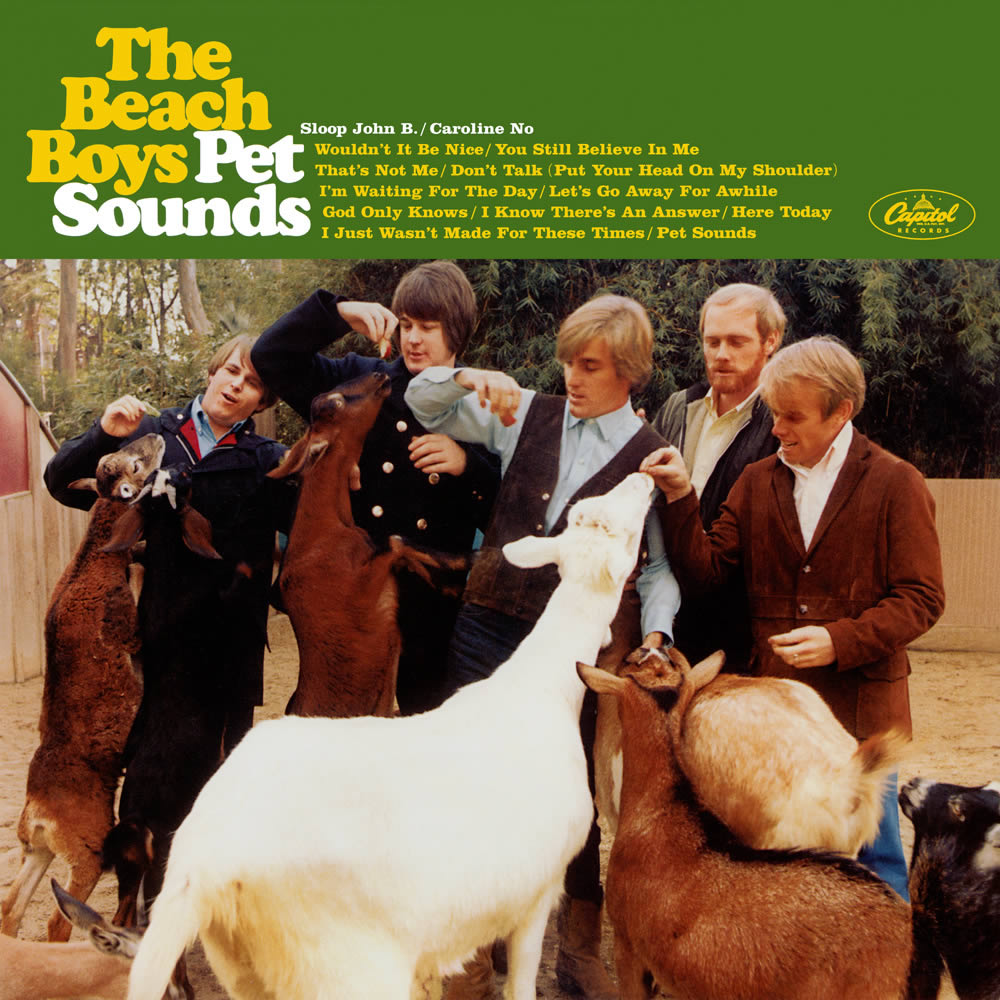
I don’t really want to talk too much more about the songs off Pet Sounds—better to stick to Kokomo, for now, since due to its simplicity I’m not really being disrespectful to the mystique of the song by subjecting it to this form of analysis. It’s reductive when I apply it to Wouldn’t it be Nice. But I think it is true that Wouldn’t it be Nice is less successful as a pop song simply because of these new, introduced complexities; it’s not appropriate for party situations that are not intimate, for instance, whereas you can play Kokomo pretty much anywhere.
Obviously, the Beach Boys have a ton of more great pop stuff. I particularly like their proclivity to keep listing a variety of locations:
You'd catch 'em surfin' at Del Mar
Ventura County line
Santa Cruz and Trestles
Australia's Narrabeen
All over Manhattan
And down Doheny Way
Everybody's gone surfin’
Surfin' U.S.A.
Just another really solid list of places, and there’s a fun anachronism here in that I don’t think Manhattan is actually all that popular of a surfing destination anymore, though clearly in 1963 it was notable enough to be listed along Del Mar or County Line Beach.
Well, East Coast girls are hip
I really dig those styles they wear
And the Southern girls with the way they talk
They knock me out when I'm down there
This one is a bit more complex (but only a bit more) insofar as there’s a list, but it’s accompanied by characteristics—obviously an invitation to continue the song and add your own verses about all the other various kinds of girls you can meet in the USA.
This is all great, but the perfect marriage of true pop sensibilities and nascent philosophical musings is obviously Good Vibrations, the most expensive song ever made at the time:
I, I love the colorful clothes she wears
And the way the sunlight plays upon her hair
Simple enough, but also, like, the things he’s describing really aren’t! The first things you notice about someone aren’t the colorful clothes they wear, or the way the sunlight plays upon their hair.
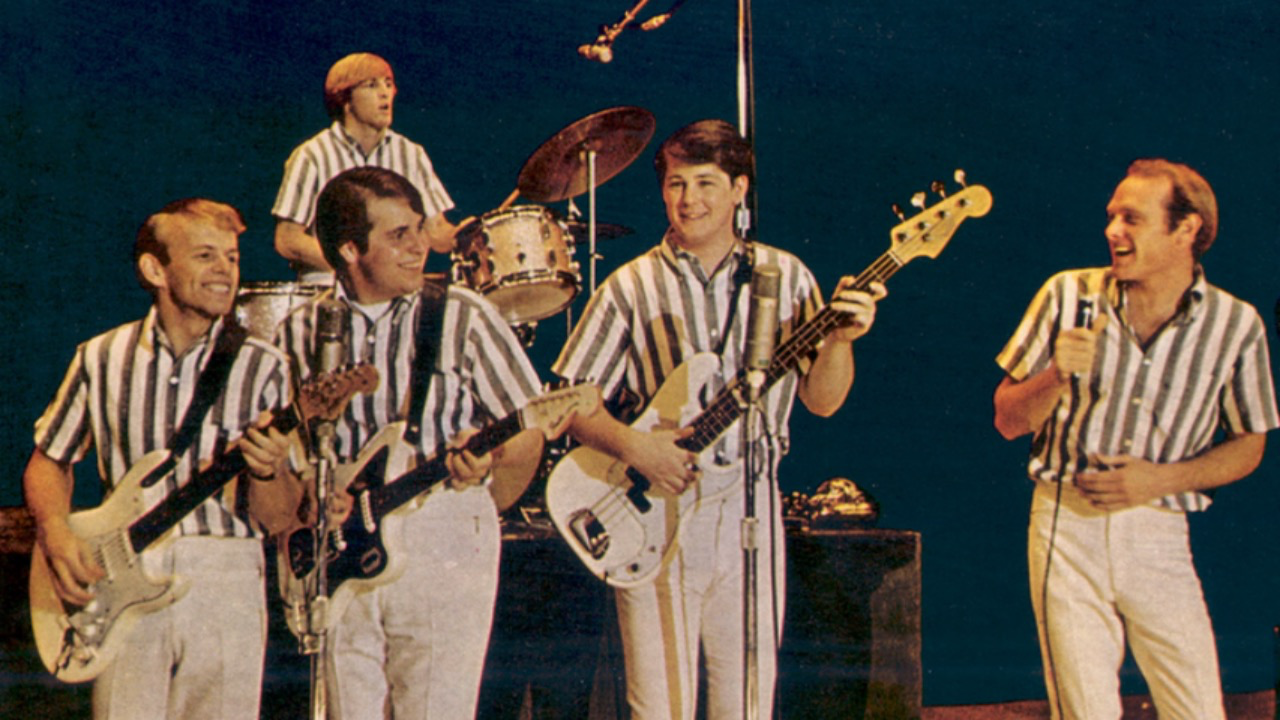
Everybody’s heard this song so I won’t go into details, but it always surprises me that Wilson scrapped his perfect fusion of psychedelia and pop upon listening to the Beatles’ Strawberry Fields Forever, which, don’t get me wrong, is a great song, but is just way too damn weird to really function as good pop music:
Let me take you down
'Cause I'm going to strawberry fields
Nothing is real
This also doesn’t really lead itself to being sung out of context, but in general it’s not even clear what he’s trying to say (you can look up that he’s referring to the strawberry fields outside his hometown of Liverpool, sure, but that’s cheating—just listening to the song without the accompanying music video it really sounds like he’s just on an acid trip). You have to sit with it for a while before the themes of alienation really begin to sink in—but who the hell is sitting on a pop song for a while? These things are supposed to be disposable mall stuff.
The Beatles made a lot of good music, but these are all things meant to be heard in the comfort of your own bedroom and not while you’re wearing your baggies out in Santa Barbara. So it’s no surprise that the Beatles’ big pop hit of their later years was Something, which sonically has the psychedelic undertone of the bassline, but lyrically is exactly what you’d expect it to be:
Something in the way she moves
Attracts me like no other lover
There we go.
weezer
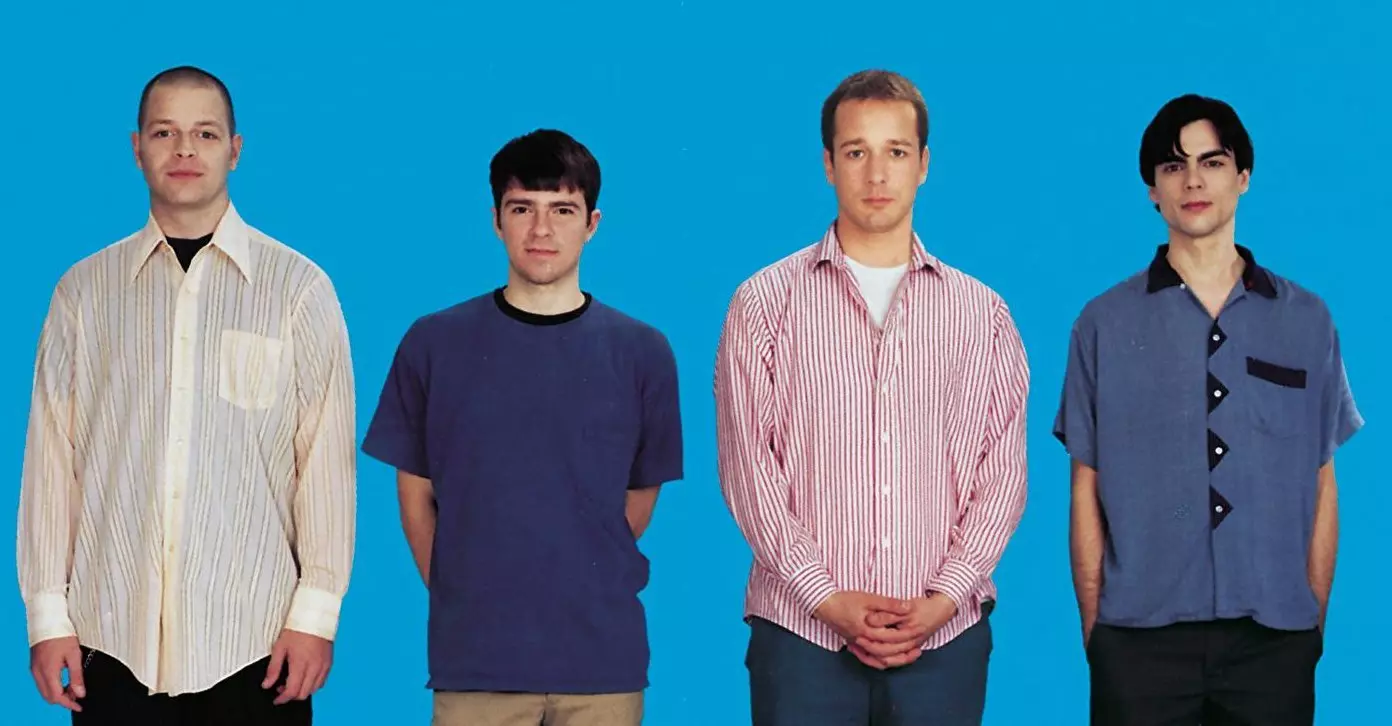
While not technically surf rock, Weezer at least petition themselves to be surf rock-adjacent (Island in the Sun). Their story has been really played out for a while, at this point: Rivers Cuomo had a moment of brilliance and achieved massive success with their debut Weezer (which I’m going to call Blue), following which he went to Harvard, started hating himself and bared out his worst tendencies in Pinkerton, which was a critical failure and generally considered embarrassing. Then people like me came around, who heard Pinkerton and came to the opinion that this is actually really, really good, and that what he’s saying is embarrassing and kind of sucks but it’s very true and so therefore a great source of catharsis. The kicker is that by the time this re-evaluation came around Rivers had started hating himself even more upon reading the critical reviews of Pinkerton following which he nuked his entire sense of authenticity by instead turning around and deciding to partake on a scientific study of pop writing conventions and sincerely sticking to those for the rest of the duration of his life.
Which led to, of course, Island in the Sun:
On an island in the sun
We'll be playin' and havin' fun
And it makes me feel so fine
I can't control my brain
This is somehow bad. However, it’s not true that whatever pop writing conventions that led to Kokomo had been somehow completely exhausted by the time Rivers came around; theres’s an infinite source of these, and whatever magic worked for the Beach Boys should, ideally, work for Weezer—except it really doesn’t. This is just not a very good song.
I suspect part of it has to do with the fact that Weezer had shown that they were capable of more—the band was always a pop band, through and through, but even their disposable pop songs carried a level of cheesiness that wasn’t all so immediately apparent as pure slush.
Woo-hoo, but you know I'm yours
Woo-hoo, and I know you're mine
Woo-hoo, that's for all the time
I look just like Buddy Holly
And you're Mary Tyler Moore
I don't care what they say about us anyway
I don't care 'bout that
This is such a stupid song, but the intimations are cutesy enough that it transforms into a real banger. But this is also a love song in the way that Island in the Sun isn’t—and it is true that the best part of Island in the Sun is also the bridge, which is a straightforward love cut:
We'll run away together
We'll spend some time forever
We'll never feel bad anymore
So maybe that’s the problem? Maybe whatever sappy cheesiness that is apt for pop music is only really transformed into the compelling force of nature it can be reigned into if it’s a love song, or deals with subjects beyond just “I’m on an island and I’m really stupid?” But Weezer themselves prove me wrong with their next big single, which I think the jury’s still technically supposed to be out on, but you could never convince me isn’t an absolute nerd classic (and there’s a reason I’m really reproducing the lyrics in full):
beverly hills
Where I come from isn't all that great
My automobile is a piece of crap
My fashion sense is a little wack
And my friends are just as screwy as me
I didn't go to boarding schools
Preppy girls never looked at me
Why should they? I ain't nobody
Got nothing in my pocket

Beverly Hills
That's where I want to be
(Gimme gimme, gimme gimme)
Livin' in Beverly Hills
Beverly Hills
Rollin' like a celebrity
(Gimme gimme, gimme gimme)
Livin' in Beverly Hills

Look at all those movie stars
They're all so beautiful and clean
When the housemaids scrub the floors
They get the spaces in between
I wanna live a life like that
I wanna be just like a king
Take my picture by the pool
'Cause I'm the next big thing

Beverly Hills
That's where I want to be
(Gimme gimme, gimme gimme)
Livin' in Beverly Hills
Beverly Hills
Rollin' like a celebrity
(Gimme gimme, gimme gimme)
Livin' in Beverly Hills

The truth is
I don't stand a chance
It's something that you're born into
And I just don't belong
No I don't, I'm just a no-class beat-down fool
And I will always be that way
I might as well enjoy my life
And watch the stars play

Beverly Hills
That's where I want to be
(Gimme gimme, gimme gimme)
Livin' in Beverly Hills
Beverly Hills
Rollin' like a celebrity

(Gimme gimme, gimme gimme)
Livin' in Beverly Hills
Beverly Hills
Beverly Hills
Yeah, Beverly Hills
Beverly Hills
Livin' in Beverly Hills
weezer (cont’d)
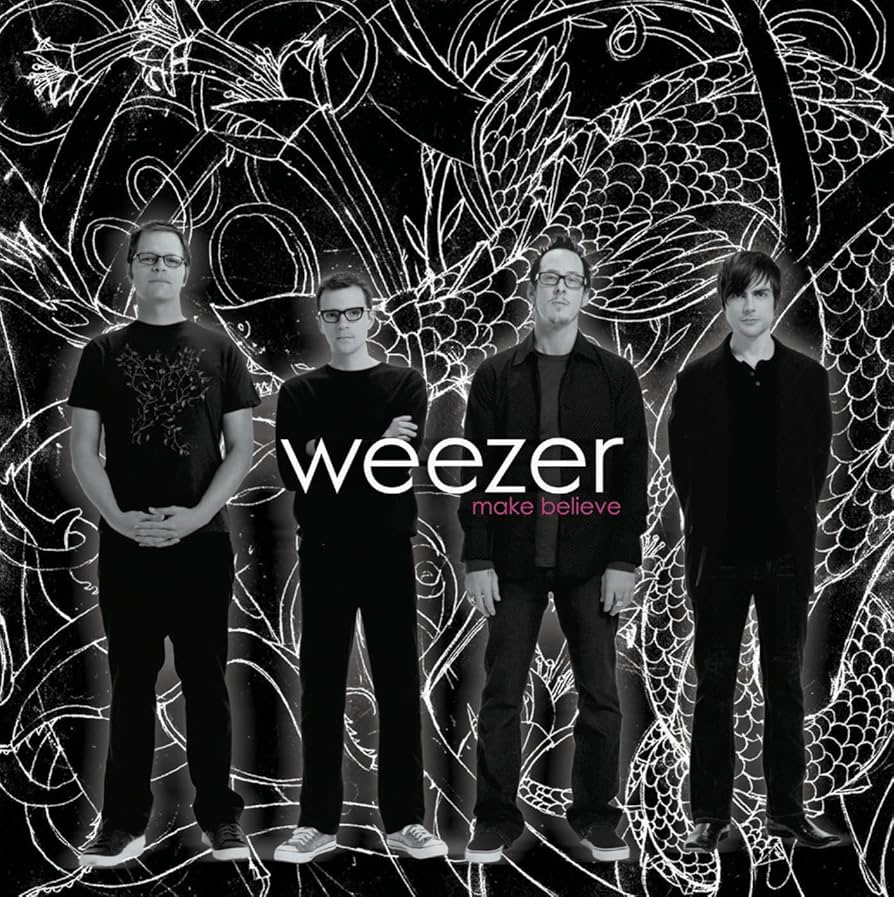
Look: I will defend this song until death. Yes, it suffers from the Weezer curse in that it doesn’t really hold up lyrically or melodically compared to the likes of Blue or Pinkerton, but the song as it stands isn’t really supposed to be a companion piece to the social and psychosexual alienation of those albums—it’s more so a companion piece to Supertramp’s Breakfast in America or Dire Straits’ Money for Nothing, both of which have a more vibrant hook, granted, but lack the particular millennium indie-sleaziness of Beverly Hills. That this was written by the guys who made Pinkerton almost contributes to its appeal.
The fact is that the sheer lack of subtlety in the lyrics above (especially including the cash-money “Gimme gimme, Gimme gimme”) is the exact manner of thought that someone in Rivers’ position would apply—and considering that Rivers himself wrote Blue something like a ten minutes’ drive away from Beverly Hills, also goes to show that this kind of person isn’t a no-class beat-down fool, but rather the kind who would perceive himself to be such. As if the meaningful difference between the groups is a “fashion sense that’s a little wack” or that he “didn’t go to boarding schools!”
But even aside from the hilarious classist undertones, that this song works is precisely because of its on-the-nose flavor. It’s weirdly backward: because the unsubtlety reveals the singer to be a narcissistic fool, it’s a lot easier to relate to him as such; a more intellectual treatment would just result in corniness—here there’s an ironic sense in which you can appreciate the singer being privilege-adjacent and therefore myopic, all while acknowledging that this manner of thinking is one the listener is also likely to fall privy to. Whether Rivers did this intentionally, I don’t know, but this really is a Weezer song through-and-through.
So what's going on here?
Why is it that Beverly Hills works, while Island in the Sun doesn't? Certainly Beverly Hills's subject matter possesses greater depth: Island in the Sun is really about nothing, and also just generally feels very stupid. But I suspect the main difference has to be in the leverage these songs take in terms of the interiority of the performer: Island in the Sun possesses neither the bright imagery of Surfing U.S.A, which at the very least betrays something about the things the singer chooses to perceive, nor the frustrations of the protagonist of Beverly Hills, which even if foolhardy have some amount of meaning. The answer, really, is: who is listening to Island in the Sun? What are you gaining from it? There’s not even enough meaning in it to allow your mind to descend into a subliminal dream-state a la Kokomo—the only biting piece of criticism you even need is Magnet’s “so laid-back it’s practically catatonic.”1
embarrassing lyricism
I keep getting back to this point I’m making about spellbinding lyricism in pop music, but so far I’ve only really talked about the Beach Boys making listicles and Weezer being conceited. What I actually mean is really vivid, embarrassing lines like these by Dua Lipa or the Arctic Monkeys:
One kiss is all it takes
Falling in love with me
Possibilities, I look like all you need
or
I'm going back to 505
If it's a seven hour flight or a forty-five minute drive
In my imagination, you're waitin' lyin' on your side
I guess in some sense that’s really the point of pop music; verbalizing the embarrassing things that you’re otherwise too self-conscious to state otherwise, and that really is what leads to it being good. Can you believe it? One Kiss is all it takes! Doesn’t that sound incredible? Or: driving back to my stupid motel room, 505, with purpose—wouldn’t it be great if you were there, waiting?

This has to tie into a broader tendency in pop music, where listening to music is far more individual an activity than it used to be—the emergence of pop music, really even the concept of pop music really only became meaningful as a denomination once music had widespread availability for individual consumption. In some sense, the art form is an entirely different one from pre-recorded music, which was far more a group activity, or a narrative activity. The primary purpose of recorded pop music these days is to serve as a soundtracking exercise: either as a party backdrop, or being fed into your ear while performing an activity besides sitting and listening patiently to the music; using it as emotional catharsis, for example, or more simply while driving—the experience is less induced by the music and rather it’s that the music forms an integral part of the entire experience. So it makes perfect sense that the lyricism has the leeway to be embarrassing: it’s being consumed individually, and it’s not possible to be embarrassed when you’re alone.
And it’s also true in reverse. The things that naturally lend themselves to listening alone are those which are embarrassing, and so embarrassing things are perfect structural elements of pop music.
abba
Most of this post has dealt with why I find songs which are simple and obvious more compelling as pop music than songs which are complex and introspective (which I also like, don’t get me wrong, but don’t really function as good pop music—music that you turn to when you’re experiencing strong surges of emotions rather than being generally mellow or self-satisfied, or really music that’s on the radio) and my answer was that stark, bright imagery and expressive music along with very obvious but powerful sentiments results in good music. This is the ABBA formula to a T. As one of the GOATs, they possess this pop sentimentalism more than anyone around, but also carry with themselves a pretty powerful talent that’s not as common to find otherwise: the knowledge that the actual content of the lyrics doesn’t matter as long as they are expressive.
There's not a soul out there
No one to hear my prayer
Gimme, gimme, gimme a man after midnight
Won’t somebody help me chase the shadows away?
This is harder to explain, I think, since the problem with Island in the Sun is that it’s basically just devoid of content—the song is about nothing in a bad way. Because this is music, it’s still possible to like and enjoy this song purely melodically, which is fine—I can’t make out a single coherent line Bilinda Butcher is singing on Loveless but I agree with all of them, nevertheless, because the music is so great. But comparing Loveless to Island in the Sun is pretty disrespectful, to be honest. Island in the Sun has a catchy tune but nothing at all to remotely enrapture you otherwise. On the other hand, Gimme! Gimme! Gimme! has very enrapturing content—it’s just not content that would seem suitable for a disco song, since it carries such extraordinarily depressing undertones.
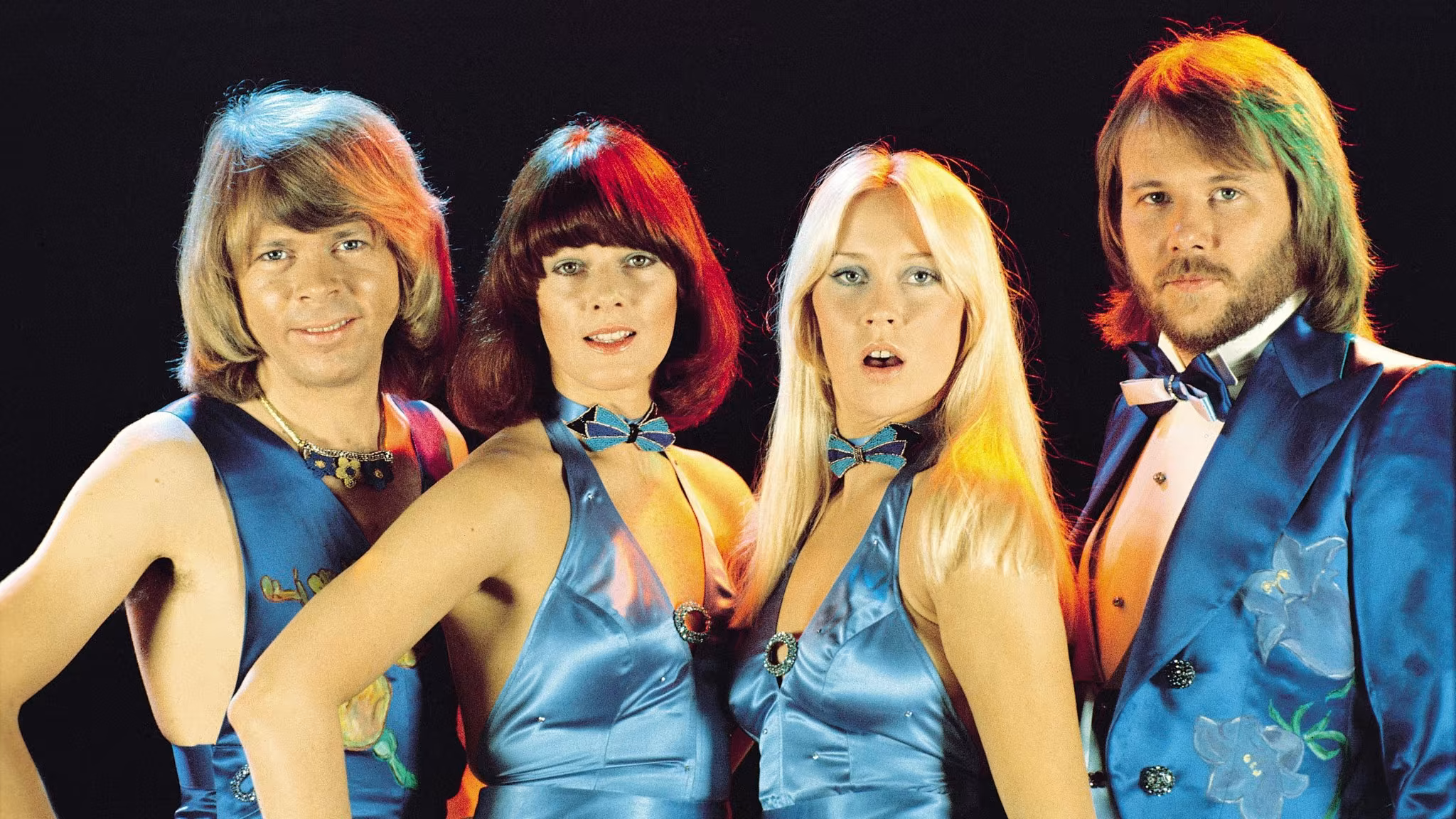
While I’m not going to claim that this is every ABBA song, the theme is one that runs consistently throughout their poppy discography, resulting in several songs that carry with them the musical quality of an upbeat love song, but simply horrifying lyricism:
Look into his angel eyes
One look and you're hypnotized
He'll take your heart and you must pay the price
Look into his angel eyes
You'll think you're in paradise
And one day you'll find out he wears a disguise
Don't look too deep into those angel eyes
Oh no no no no
The gods may throw a dice
Their minds as cold as ice
And someone way down here
Loses someone dear
It’s pretty interesting to me that creating these danceable tunes is really very distinct from imbibing them with appropriate lyrics, but the underlying “appropriateness” is merely the compelling simplicity that they offer and not the actual content of the lyrics. ABBA are probably the most famous for this, but The Police have a knack for taking it to an extreme.
Roxanne
You don't have to put on the red light
Roxanne
You don't have to put on the red light
I don’t have as much love for this song as I do for the others in this post, but it’s undeniably catchy (I’m just not as convinced that The Police have aged as well, but then I’m not really close to 40, yet, either—they seem to attract an older audience). It seems to particularly be a recurring trend in ‘80s pop, well-known for being carefree and synth-driven, but not really ‘dark,’ per se; I suspect actually combing through pop lyricism from the ‘80s and comparing it to today’s would yield interesting results. For every Wake Me Up Before You Go-Go there’s a Fast Car.
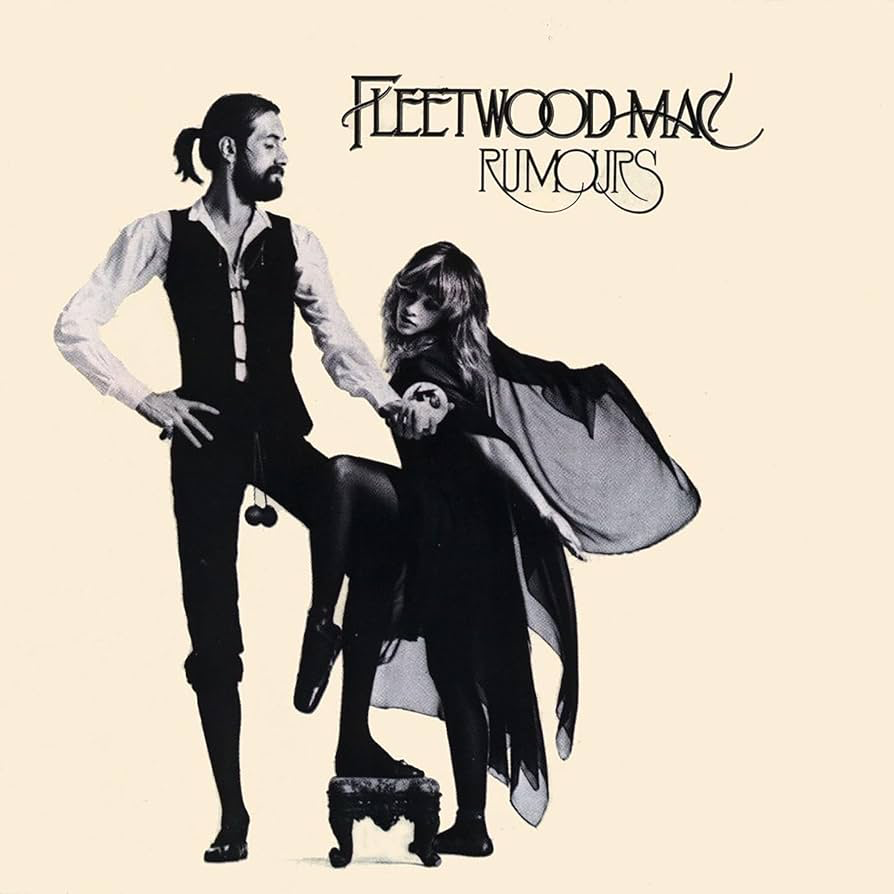
I don’t actually think I’ve seen the introspective/simple divide better surfaced than in the other ‘70s band that consisted of genius couples deriving extraordinary lyricism from their on-off relationships: Fleetwood Mac, with Stevie Nicks and Christine McVie on completely opposite ends of the spectrum. Christine is simple and beautiful, penning what on a good day might be the gun-to-my-head best love song ever written:
Oh I,
I wanna be with you everywhere
While Stevie, genius that she is, pens what on a good day might be the gun-to-my-head best breakup song ever written:
Like a heartbeat drives you mad
In the stillness of remembering what you had
And what you lost
Try dancing a waltz to Dreams, though. Even the structure is hard to grasp on first listen.
actually i guess my thesis is wrong
I’ve spent a lot of time here ruminating about trends in pop music I enjoy and appreciate, extrapolating and trying to tie it into a central theme of what makes a ‘good’ pop song. However pop music is versatile enough to prove me wrong even in the broadest strokes.
Don't you tell me to deny it
I've done wrong and I want to suffer for my sins
I've come to you 'cause I need guidance to be true
And I just don't know where I can begin
Ooh, what I need is a good defense
'Cause I'm feeling like a criminal
And I need to be redeemed
To the one I've sinned against
Because he's all I ever knew of love
At least Criminal has the excuse of being written by an arguably Brian Wilson-level genius. West End Girls, on the other hand, I cannot even begin to analyze—I genuinely have no idea what makes it so good, and also what makes it so poppy. This song, despite not even being particularly catchy, is mesmerizing even if you don’t know what a “west end” is, and in some sense even if you know of the concept you don’t really know of it unless you’ve been there—which, for me, was when I was barely conscious.
Too many shadows, whispering voices
Faces on posters, too many choices
If, when, why, what? How much have you got?
Have you got it, do you get it
If so, how often?
Which do you choose
A hard or soft option?
(How much do you need?)
In a West End town, a dead end world
The East End boys and West End girls
In a West End town, a dead end world
The East End boys and West End girls
West End girls
West End girls

endnotes
THE OVER/UNDER: WEEZER, Magnet Magazine, retrieved 22 August 2025.