come back to the 5 & dime, marcie blane, marcie blane

I have this passive habit of participating in dream interpretation, which usually manifests in the form of me waking up in a cold sweat, typing up whatever it was that disturbed me on the notes app on my phone, and forwarding it to a few well-chosen friends who provide feedback based on the severity of what I saw—pell-mell ignoring me if it’s merely a Lovecraftian nightmare, or delving into deeper analysis if it involves real people (them, often, but also a mess of recurring actors in my life—parents, ex-girlfriends, Tom Brady, the usual). I would be inclined to keep a complete dream diary if not for the fact that such a thing is almost completely useless if tampered with and I don’t really think I possess the fortitude to transcribe out every single one of them, especially the truly embarrassing ones which horrify you upon waking up and force you into a nebulous stupor of attempting to ward away your ‘intrusive thoughts,’ or whatever. One of my close friends supposedly had one for over a year! I think they’re hidden away in a box, in a place no one (including him, most of the time) has access to. His conclusion is that each individual dream is surprisingly easy to interpret in isolation, but forms a stronger matted net of the various disturbances in your life when seen as part of the greater picture; the meanings are not usually anything unexpected, but it’s shocking to see them so bluntly laid out.
As much as I would like to partake in genuine Jungian psychoanalysis or at the very least dabble in applying the I Ching1, actually noting them down has given me the humbling experience of determining that I am not a particularly complex person in the essentials—it’s mostly just my gaping flaws and various kinds of insecurities unceremoniously lobbed at me.
Occasionally, however, I get a very entertaining dream. My favorite so far has been a (pretty much) 1:1 recreation of The Matrix from the point of view of the camera—which means that I basically played close to the entirety of the movie back in my head as if I were watching it.
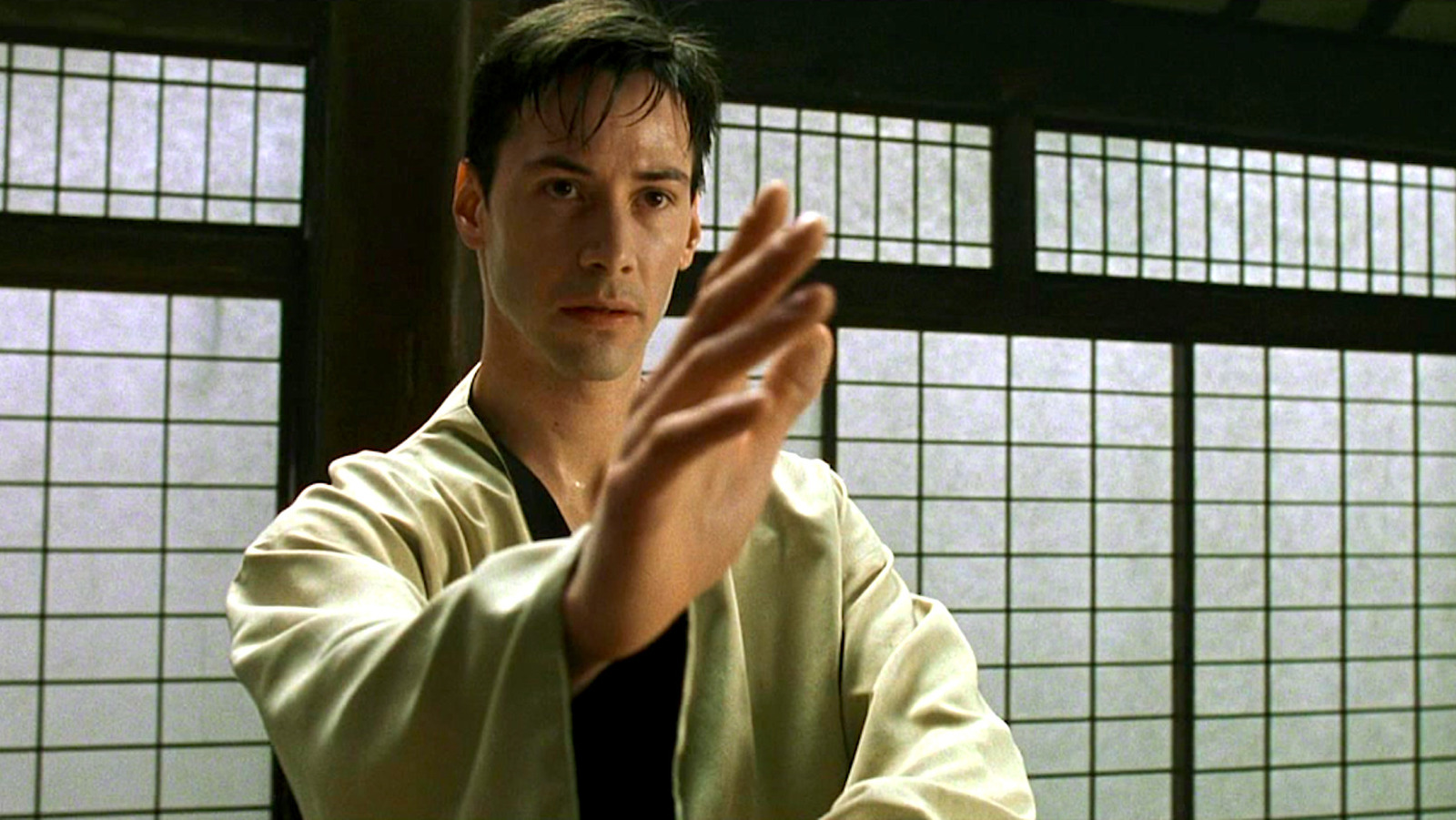
The ‘interpretation’ here is of course largely just that I really like The Matrix, but that’s also a distinctly abnormal way in which a movie manifested as a dream. It is far more usual for movie tropes to slip into the particulars of my daily life. The most recent iteration of this, and the one that prompted me to write down this post, was a dream in which I was neatly slotted in the place of Justin Theroux’s character Adam Kesher in Mulholland Drive, with the rest of the cast being played by a variety of people I knew in real life. The actual plot proceeded through a mixture of Theroux’s storyline and Naomi Watts’ ‘dream’ storyline that comprises the bulk of the first half both being enacted by me (although I was statically Theroux’s character, just going through a more complicated arc). In retrospect there was some unintentional hilarity—I have a friend who is a recurring minor character in my dreams, and in this one he was present largely to get jump-scared by a trash monster—but most of it was very unnerving and disturbing. The climactic moment of this dream was a recreation of the ‘This is the Girl’ sequence in which Theroux, the director of a movie being made in the film, is forced to cast an actress he doesn’t want to due to forces beyond his will despite knowing that Naomi Watts is definitely the best choice for the role… and he looks back and their eyes meet, there’s an uncertain exchange of emotions, and then she leaves2.
What happened to me was that the sequence kept repeating and rebooting itself in my head with different people playing Naomi Watts’ character and the lyrics of the song sung by Camilla Rhodes becoming increasingly sinister each time to the point where it became terrifying and I was forced awake.
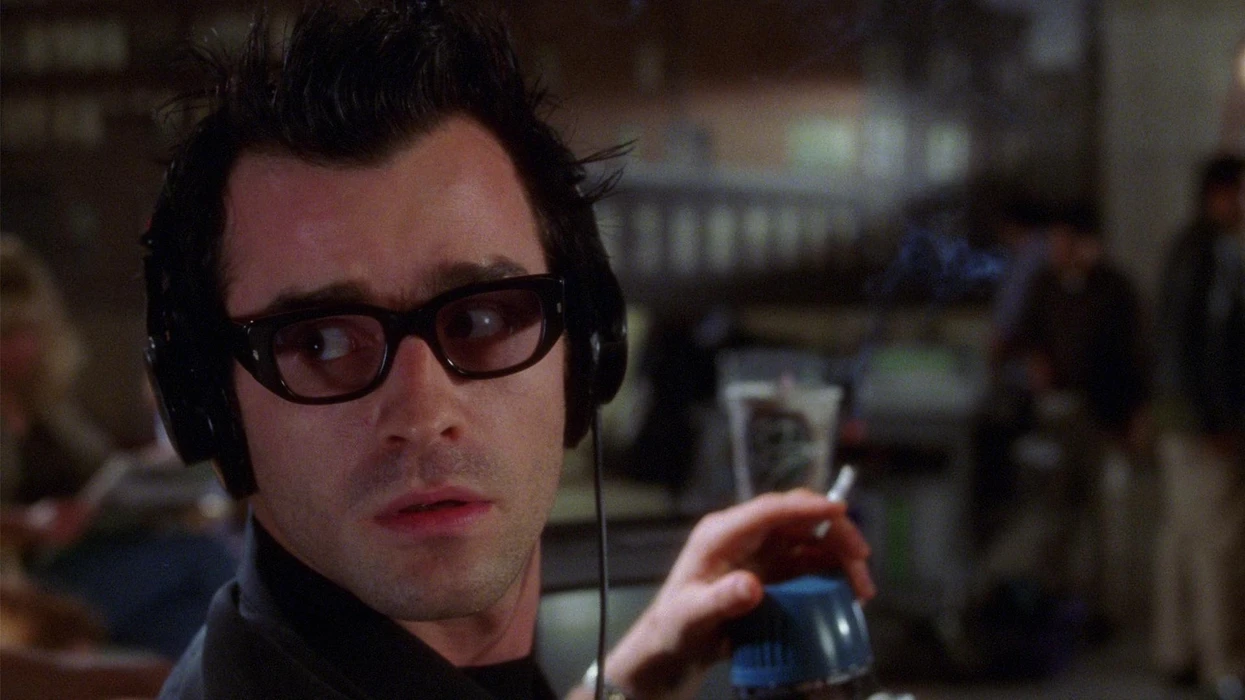
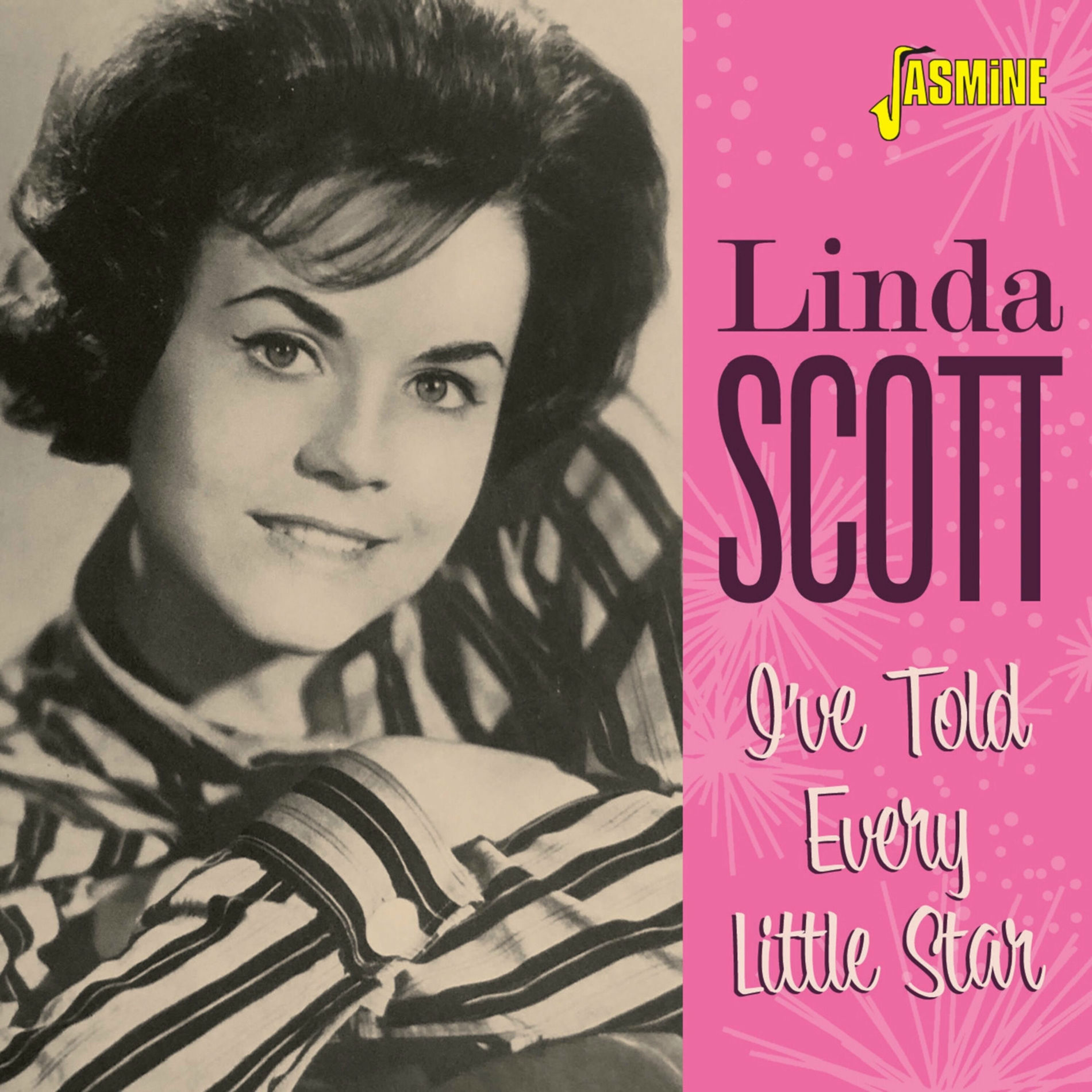
Now I don’t think it takes a genius to interpret what this particular dream was about, but I’m going to put this on hiatus for now this because it makes me uncomfortable to perform a public dissemination of my innermost thoughts. Once I woke and performed the whole ritualized transcription, I navigated to the video above to listen to the actual song played in the movie, which turned out to be Linda Scott’s I’ve Told Every Little Star (1961).
Oh, baby, I've told every little star
Just how sweet I think you are
Why haven't I told you?
Maybe you may love me, too
Oh, my darling, if you do
Why haven't you told me?
What a great song! A little bit of research suggests that it was part of the original wave of ‘teen idols’ in the ‘50s and the ‘60s, which was probably the first truly organized pop culture phenomenon designed to appeal to teenagers as an independent social class in themselves. What stands out to me, of course, is the stark directness of the lyrics—there’s really no pussyfooting around, no attempt to cater to any kind of sensibility; it’s just a bare-bones pop song about being in love with someone. Naturally, listening to this led me to go down a long rabbit hole of late ‘50s and early ‘60s pop music. We’ve all heard the jazz, but because of its improvisational nature even jazz ‘sellouts’ like swing still carried with them the underlying sensibilities of New Orleans—like, I think there’s a meaningful sense in which you cannot really call any Ella Fitzgerald song just pure product in the vein of Linda Scott’s recording above. Maybe Sinatra’s early stuff?
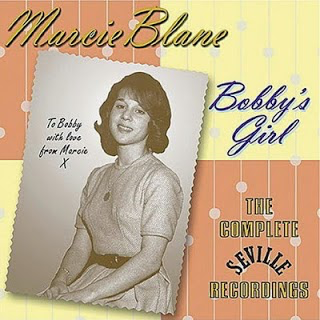
In any case, allowing Apple Music to cycle through related songs3 led me to this gem, which charted in 1962:
Everybody likes me
I'm everybody's friend
They say, "You're great girl—
On whom we can depend"
Now this should make me happy
But every night I cry
If I'm such a great girl
Why can't I get a guy?
The teachers say I'm clever
The smartest girl in school
But when it comes to things like boys
I guess I'm just a fool
I wish that I were different
I wish that I could be
Like all my silly girlfriends
Who have more fun than me
This is Marcie Blane’s Why Can’t I Get a Guy, ostensibly marketed towards high-school girls. Because I’m a dumb idiot easily swayed into sentimentalism, however, my reaction to this is some flavor of “the world is so unfair, why can’t she get a guy, I hate everything, [grumble].” Contributing to this, of course, is how Marcie sounds—there’s a genuine longing in her chorus borne out of frustration, which would make sense, since it would indeed appear that she was 18 at the time this was written.
Obviously, I think this is genius.
This bare-bones teenage sentimentalism can’t really be found in, like, Ella Fitzgerald, or something, as I previously mentioned, being more complex works of art—the emotions she deals with are somehow deeper, more matured, which would make sense since her target audience is more mature, less prone to hysteria. But this is also the kind of teenage sentimentalism that can’t really be found in today’s teen music. Songs for teenagers today are more complex in terms of how they conduct themselves lyrically. Take Taylor Swift’s You Belong With Me, which is about something similar to Marcie Blane’s song:
But she wears short skirts, I wear T-shirts
She's Cheer Captain, and I'm on the bleachers
Dreaming about the day when you wake up and find
That what you're looking for has been here the whole time
My definition of simple here is a bit nuanced—I don’t mean that they are communicating a more hard-to-get sentiment, although that must also necessarily be true. What I mean is that the mental framework required to understand what Swift’s song is about requires you to have knowledge of a greater number of things. For example, “she wears short skirts, I wear T-shirts” is setting up a contrast; you need to be able to ‘know’ what these things represent, and why T-shirts are a sign of being lame. There is a very significant amount being communicated here! The guy of Taylor’s fancy is interested in a different kind of girl, one that Taylor has to ‘compete’ with.
This is also true in Marcy’s song, but the framework through which she describes the ‘silly girlfriends’ she wishes she were like is a lot simpler; they just have boyfriends and therefore have more fun than her. The key attribute of difference here is just some amount of idle-mindedness and ability to procure a guy. Meanwhile the framework through which Taylor thinks of her competition has numerous other attributes rather than just being the person her ‘guy’ is interested in. There is more material here to work with. She’s also cheer captain, Taylor is also on the bleachers, dividing the two socially according to high school cliques.
This is really interesting to me because the cliques of You Belong with Me are also how Taylor’s audience perceives themselves—it must be, otherwise the song wouldn’t make sense. Would Taylor’s song work if introduced to the ‘60s audience? It’s a good question, and my answer is I honestly don’t know. The social constructs that are present in You Belong With Me were also present in the ‘60s, but it’s impossible to say if they were perceived in that manner. But I think the broader question is probably more potent—suppose that there was a song like You Belong With Me which dealt with the same themes, just updated for the ‘60s audience so that there was no disjunction between the cliques as they existed and how they were perceived. Would the ‘60s audience ‘get’ the song?
My answer is maybe not even then. Just because the audience would be able to recognize the cliques doesn’t mean that the manner in which Taylor is asking them to relate to the contrast would hit in the same way.
This is a really interesting question, one which I’ve generally become more interested in as of recent. Maybe a broader perspective could help in phrasing it correctly. I’ve found myself pondering this increasingly as of late. Maybe a broader perspective could help in phrasing it correctly.
Do people today have more complex thought patterns than they used to?
It is an interesting question. I do not know the answer.
endnotes
Zeng, J. (2023) The I Ching as a Potential Jungian Application: History and Practice. J Anal Psychol, 68: 913–932. https://doi.org/10.1111/1468-5922.12958.
As a side note, it is interesting that I am interpreting a dream about Mulholland Drive, which is itself (famously) a movie that takes place in a dream—indeed, most interpretations of the scene I talked about conclude that the scene is taking place within a dream in the context of the movie itself. So I was dreaming the dream from Mulholland Drive, but my own interpretation is different from how the dream should be interpreted in the movie. In the movie the dreamer is Naomi Watts, but in the context of my own dream the dreamer is Theroux (which is the character I am projected onto).
Listening to pre-1960s music is something I do with some frequency, but it is always an event—post-‘60s music is just what I listen to on the daily, so it can’t really be counted as such. But whenever I fall into these spans of listening to old pop a fun exercise is always to listen to something quite mild like The Beatles’ I Want to Hold Your Hand or The Kinks’ You Really Got Me immediately after—with that pre-‘60s context in mind, these songs sound insane. Maybe the only legitimate descriptor is that they sound like, well, as if the devil somehow made his way into your stereo.