i want to go to west texas
I have never been to west Texas. But I have been to California and Nevada and Arizona and fallen in love with the neverending wastelands of the frontier. A not-insignificant part of my love of the United States1 is a love for the land on which it lies—perhaps one of the singularly best pieces of land on earth, rivaled really only by the spectacles of China and India (although we over here seem to have smothered it with layers and layers of concrete). The nature of how land exists in America has always seemed to me to be strange and foreign, a reversal from my homeland in India where long expanses of civilization are interspersed with the occasional natural wonder. In the US it is entirely different. Most of the country is really just nothing. Drive long enough on the roads and maybe a city might pop up in a hundred or so miles, but more than likely it might be some sort of trailer park or a solitary dwelling occupied by people who have rare defiance of nature. In America you cross the horizon and see a city approaching in the distance. It is a sight otherwise impossible to find.

In this barren desert—one of the hottest in the world—you find yourself occupied by the sheer nothingness of your surroundings. It is enough to induce simplicity even amongst the most neurotic of men. Every night you can look up and see the Milky Way. This is where Delillo sends his protagonist Gary Harkness, a guard for Logos College and a recovering troublemaker, of sorts. Occupied to the brim with the threat of global thermonuclear war, Gary and his teammates attempt to use football to transform their minds into the autonomic ideal that forms the thought processes of all the best athletes: nothing at all2.
At Penn State, the next stop, I studied hard and played well. But each day that autumn was exactly like the day before and the one to follow. I had not yet learned to appreciate the slowly gliding drift of identical things; chunks of time spun past me like meteorites in a universe predicated on repetition.
Each day, for example, I spent some time in meditation. This never failed to be a lovely interlude, for there was nothing to meditate on. Each day I added a new word to my vocabulary, wrote a letter to someone I loved, and memorized the name of one more president of the United States and the years of his term in office. Simplicity, repetition, solitude, starkness, discipline upon discipline. There were profits here, things that could be used to make me stronger; the fanatical monk who clung to my liver would thrive on such ascetic scraps. And then there was geography. We were in the middle of the middle of nowhere, that terrain so flat and bare, suggestive of the end of recorded time, a splendid sense of remoteness firing my soul. It was easy to feel that back up there, where men spoke the name civilization in wistful tones, I was wanted for some terrible crime.
Gary is joined in this endeavor by his bedwetting roommate Anatole Bloomberg, who has found himself reaching a formidable weight of three hundred pounds.
I am a twentieth-cenury individual. I am working myself up to a point where I can exist beyond guilt, beyond blood, beyond the ridiculous past. Thank god for America. In this country there’s a chance to accomplish such a thing. I want to look straight ahead. I want to see things clearly. I’d like to become single-minded and straightforward in the most literal sense of those words. History is no more accurate than prophecy. I reject the wrathful God of the Hebrews. I reject the Christian God of love and money, although I don’t reject love itself or money itself. I reject heritage, background, tradition and birthright. These things merely slow the progress of the human race. They result in war and insanity, war and insanity, war and insanity.
But the remoteness helped me. The desert was an ideal place […] I spoke aloud to myself in the desert, straightening out my grammar, getting rid of the old slang and the old speech rhythms. I walked in straight lines. I tried to line myself up parallel to the horizon and then walk in a perfectly straight line. I tried to become single-minded and straightforward, to keep my mind set on one thought or problem until I was finished with it. It was hot and lonely. I wore a lot of clothing to keep the sun from burning me and causing my skin to peel. Sometimes I read aloud from a children’s reader. I wanted to start all over again with simple declarative sentences. Subject, predicate, object. Dick opened the door. Jane fed the dog. It helped me immensely. I began to think more clearly, to concentrate, to leave behind the old words and aromas and guilts.
As Gary and Anatole embark on this journey they find themselves increasingly drawn to their coach, a solitary genius named Emmet Creed, who finally appears in person in the last few pages—telling Gary that his acts of rebellion have resulted in him being appointed offensive captain.
The inner life must be disciplined just as the hand or eye. Loneliness is strength. The Sioux purified themselves by fasting and solitude. Four days without food in a sweat lodge. Before you went out to lament for your nation, you had to purify yourself. Fasting and solitude. If you can survive loneliness, you’ve got an inner strength that can take you anywhere. Four days. You wore just a bison robe. I don’t think there’s anything that makes more sense than self-denial. It’s the only way to attain moral perfection. I’ve wandered here and there. I’ve made this and that mistake. But now I’m back and I’m back for good. A brave nation needs discipline. Purify the will. Learn humility. Restrict the sense life. Pain is part of the harmony of the nervous system.

we all live in the united states
In the introduction to his book Welcome to the Desert of the Real, consisting of five essays about 9/11, Slavoj Žižek argues that the mental framework required to understand 9/11 as an act has been sufficiently corroded by western understandings of democracy so as to be incomprehensible. He recalls a story about an officer of the German Democratic Republic stationed in Siberia, who attempts to communicate with those back home through the medium of letters, which are unfortunately subject to heavy censorship. So they make a plan: he will buy blue ink and red ink, and everything in blue ink is the truth while everything in red ink is false.
Eventually the following letter arrives home: “Everything is wonderful here; the shops are full, food is abundant, apartments are large and properly heated, cinemas show films from the West, there are many beautiful girls ready for an affair — the only thing that you cannot get is red ink.”
The story, according to Žižek, is one about how we feel free because we lack the very language to articulate our unfreedom. In the absence of red ink, the officer cannot even articulate the problems he experiences.
What the lack of red ink means is that, today, all the main terms we use to designate the present conflict—‘war on terrorism’, ‘democracy and freedom’, ‘human rights’ and so on—are false terms, mystifying our perception of the situation instead of allowing us to think it.
— Passions of the Real, Passions of Semblance, Slavoj Žižek

This idea is not new, but particularly well articulated in this instance. In his review of JG Ballard’s Millennium People, Mark Fisher talks about how Ballard fully articulates why the failure of 9/11 was because it was an act imbibed with ‘meaning’—as opposed to the acts committed by the protagonists of Millennium People, which are inherently meaningless. Such meaningless atrocities are now commonplace across the world. But reading these acts from Žižek or Chesterton’s perspectives brings to light something new: it is not true that the essential framework of postmodernism has eroded meaning altogether, but rather that the concepts which gave birth to modernity imbue themselves on our minds so well that they make understanding such acts impossible. In short: it is not true that 9/11 as an act is devoid of meaning, it is simply impossible to understand from the perspective of the American mind. To understand 9/11 would require being born to fundamentalists in the Middle East, having suffered a series of moral setbacks culminating in strong ties to al-Qaeda. From this perspective, it makes total and unequivocal sense.
The erosion of certain ways of thinking is not something that is unique to American hegemony, but has been strongly linked to it in the past years—and at least some scholars would agree that the violence Kissinger has perpetrated here may be far worse than the atrocities in Cambodia. The method through which these ideas were exported was through the export of language.
An essential comparison here is the decolonization of Africa. It is well known that African countries do not ‘make sense’—the instability of course, being that the borders were drawn ad hoc by colonial powers who were not African and did not understand the African people; they were divided arbitrarily, pitting enemies into the same country to the point where most countries either collapsed, served as puppet states or went though stages of internal conflict until shadows of states rose out of the ashes. But the deeper instability here is that the notion of nation-state is simply not one that is applicable to Africa; why would it be? The nation-state is a predominantly European notion, borne out of people who were so tired of fighting wars for kings on the same soil again and again and again that they collectively agreed to create something new—not just a method of governance, but an entirely new method of identity, linked to an odious mixture of historical land, peoples and the shared history of governance. The Africans made no such choice. Neither did the Indians, nor the Chinese, nor did anyone else; the ‘successful’ Eastern nation-states such as China or the USSR were initiated into the status via enormously destructive communist revolutions, largely ridding all notions of historicity and ‘regressive’ culture (code for non-western culture) until a nation-state could be established. India, of course, having neither suffered the war nor the cultural revolution, is decidedly not a modern nation-state, and is hence strongly prone to pre-war style fascist nationalism.
And maybe there will be yet another war, sure, but this cultural export of nation-states was merely step one in establishing American hegemony. This is what Justin Smith-Ruiu has to say about the US in his latest article about politics:
When I think of the United States these days, I find I slot it mentally somewhere next to the Soviet Union: a place that used to exist, and that in the previous century produced many artifacts and spectacles that can now be revisited virtually when you are feeling nostalgic. You can open up the box and watch snippets of Oklahoma, for example, or Hellzapoppin, or Jimmy Durante with that ah-cha-cha-cha routine of his, and countless other monuments besides that confirm what you already know — that if you are over forty or so you were substantially shaped in a world that can now only be accessed by means of archeology.
Maybe that is the real message of the cold war; it was not the USSR that ceased to exist, but also the United States, replaced instead by a seeping vector of ideology that slowly permeated the rest of the world. It is not that postmodernism was inevitable, it is that it was spread through conscious effort. The American cultural hegemony allowed the infinite export of terms like “flexibility,” “governance,” “exclusion,” “multiculturalism,” and “minority”—these terms are an accurate description of of the United States, but are they applicable anywhere else? The inherent limitations imposed by foreknowledge of such ways of thinking are precisely those, as Chesterton says, that prevent the slave from ever freeing himself. Our modes of thinking are now predominantly American modes of thinking. People may claim to be Brazilian, or Chinese, or Liberian, but they are, unified by the medium of the internet, inherently American—it is no longer the case that there are parts of the map where there may be dragons.
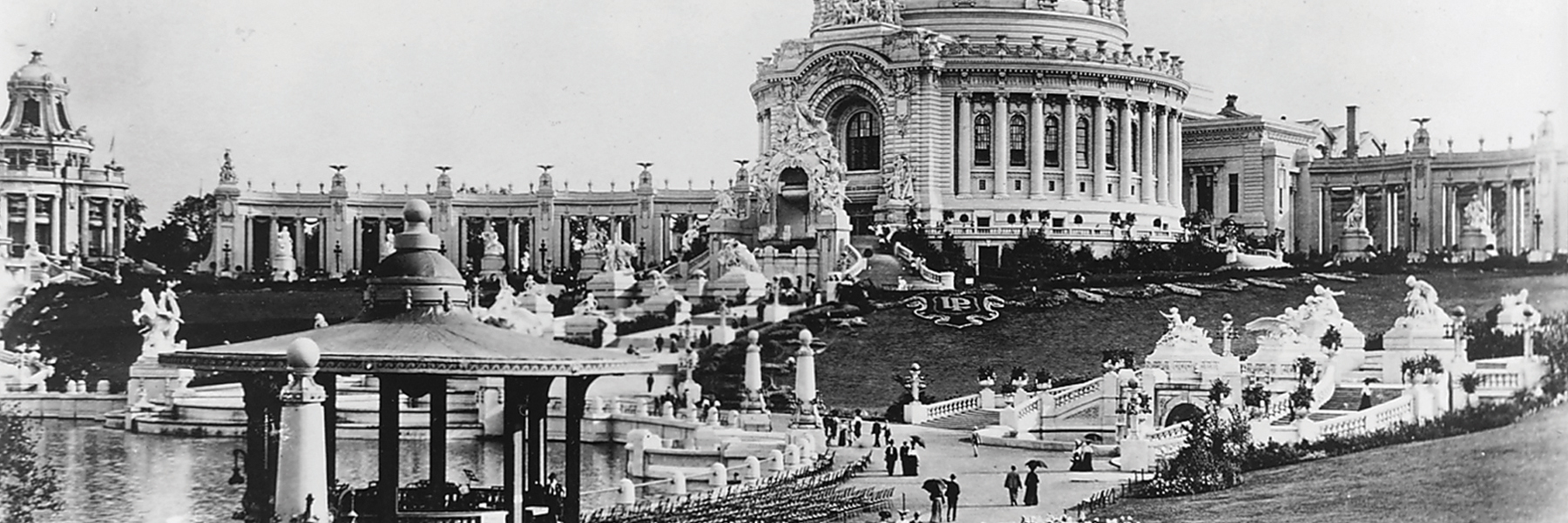
Recall the Western obsession with Japan, so ‘foreign’ in scope, yet populated by people whose problems resemble, more closely than anything, the same infertilities and violence of American cities. A notable advisory issued to western tourists is that the Japanese are xenophobic, and that foreigners feel out of place there. But this is what the world is supposed to be like—the country was designed for people whose ways of thinking were so incomprehensible that the only way to subdue them was to drop the bombs. The only part of the world was was supposed to be ‘welcoming’ to people of all kinds was the United States.
The tragedy of this cultural erosion, still perpetrated (more so than ever!) by the nebulous beast we refer to as ‘the internet’ is so vast so as to be truly baffling. The essential differences that made us what we were have now been entirely diffused. We are all living in the United States. And like Americans, in the pretense of ‘celebrating’ our cultures we have reduced them to mere token representation à la food or tradition. We may yet know the ‘traditional’ way to prepare sushi—we may yet have textual renderings of the bushido—but we will never, ever get another samurai.
Of course—there are many who believe that the western ideologies perpetrated by the United States are ‘the best’ ones, and what I have described is not tragic. But to do so is to ignore the collective wisdoms and negate the experiences of our past generations, going against the very Christian notion of empathy; the lives of the trillions who came before meant something, dammit, they were people, just as you or I were, and they lived good lives and meaningful lives and beautiful lives, and they created wonderful things. They were more human than we ever were—we cyborgs of form and function, who in our quest for meaning have laid waste to the whole notion altogether.

the world according to kierkegaard
This external manifestation of the ‘obsession’ with postmodernity has led to failed countries, declining populations, and a world which is therefore full of meaningless acts. In some sense the world we live in is now profoundly Nietzschean. But what I am interested in is the internal analogue of this—we know what damages have been done to our collective psyches, but what about our individual ones?
Here, too, I am beaten to the punch by Mark Fisher, writing for The Guardian in 2012:
Mental illness has been depoliticized, so that we blithely accept a situation in which depression is now the malady treated most by the NHS. The neoliberal policies implemented first by the Thatcher governments in the 1980s and continued by the New Labour and the current coalition have resulted in the privatization of of stress […] The NHS, like the education system and other public services, has been forced to try to deal with the social and psychic damage caused by the deliberate destruction of solidarity and security […] It would be facile to argue that every single case of depression can be attributed to economic or political causes; but it is equally facile to maintain—as the dominant approaches to depression do—that the roots of all depression must lie either in individual brain chemistry or in early childhood experiences.
— Why mental health is a political issue, Mark Fisher
It is true that proclivity to mental illness is an effective metric via which to measure individual brain chemistries—after all, it’s not that everyone is mentally ill. But the precise pathologies through which mental illness manifests is now globalized. But with individual brains being so highly subjective, what exactly is happening here? Perhaps it is best to begin by making some bulleted observations and asking ourselves certain questions.
- The way that mental illness manifests is standardized globally according to the DSM-5 (Diagnostic and Statistical Manual of Mental Heath Disorders, Vol. 5), and the training provided to mental health practitioners throughout the world is based on the DSM-5. Is it true that the DSM is an accurate description of mental illnesses everywhere? The DSM was largely compiled for a western audience, and there is, in fact, no reason that it would be applicable to people who live in widely different societies.
- As our societies converge to this postmodern ‘American’ ideal, the pathologies that people with mental illness demonstrate converge to the pathologies described in the DSM. It is true that, for instance, Aboriginal people show the highest rates of depression in Australia. But is it necessarily true that what practitioners perceive as depression is indeed depression as described by the DSM-5? What we call a mental illness is a collection of symptoms, and each individual condition is highly localized. But if ‘depression’ is merely a western stamp applied to Aboriginal people with mental health conditions, are the remedies effective?
- Does the knowledge of mental illness correspond to prevalence mental illness? How do we know that by spreading information about mental illness, we are not, in fact, achieving the opposite—that by making people aware of the pathologies associated with depression, we are, in fact, making it more likely for them to act out these pathologies?
The answer to these questions can be explained by studying the case of Anorexia Nervosa in Japan, where traditional doctors used to describe a phenomenon of food-avoidance termed Fushoku-byo in the 17th and 18th centuries which manifested as large proportions of young women abstaining from eating food leading to impaired physiological and psychosocial functioning. However—and this is the key point—none of these disorders were linked to fatphobia or body image issues.
Today the Japanese, like all western countries, have increased prevalence of Anorexia among their young women. Anorexia, however, is almost certainly a body image issue, and it has been well-studied that it arises in societies where women are subjected to discrimination based on their body shape and those which have a prevalence of unhealthy body types in their media. So what is going on here?
The answer lies in the fact that while the pathologies demonstrated by Fushoku-byo and Anorexia are similar they are fundamentally different illnesses. There is no reason to suspect that Fushoku-byo could be ‘fixed’ by Anorexia treatments. But why has Fushoku-byo been replaced by Anorexia? As western ideas spread and the patients afflicted with Fushoku-byo become aware of Anorexia, it is completely possible that they develop the associated body-image issues as well, transforming the illness into something that it was not.
The internal reference frames through which people conceptualize of not only mental illnesses but themselves is now so intrinsically linked to the western view of things that it has introduced pathologies into populations which previously did not have any. Now that everyone is a suburban American, everyone has the problems of a suburban American—disenchantment, lack of meaning, hatefulness. And these ‘problems’ are somehow expected to be solved through individual self-reflection! In the process of exporting American ideology to the world, they exported American illnesses as well. It is preposterous to think that societies which are decidedly not American would not have had ways of tackling the underlying ways that illnesses manifested in them—these are societies, and not (as our modernity affliction would like us to think) infantile. But these new illnesses, these new pathologies—with society having no methods to tackle them beyond the individual practitioner method of ignoring the social aspect of these illnesses entirely3—run through the population and destroy both the people and the societies underlying them.

Think of Kierkegaard, born and living in Denmark, unable to see the sun for months on end—it is not a matter of what thoughts arise there, but when the following comes to mind:
I am like the Lüneburger pig. My thinking is a passion. I am very good at rooting out truffles for others; I myself take no pleasure in them. I root out the problems with my snout, but all I can do with them is toss them back over my head.
— Either/Or, Søren Kierkegaard
Then why are you, living on the sunny shores of California, relating to Kierkegaard? Kierkegaard, Dostoevsky—these are authors that have been lauded as presenting the very core of the human condition, but was this the human condition when they wrote them in the frozen wastelands of northern Europe? What has happened is that the very societies that we have constructed have been those particularly conducive to resulting in the kinds of people that would understand and relate to Kierkegaard, that would understand and relate to Dostoevsky. Is this something we hope to achieve? Is this good?
an interlude
It may seem here that I am suggesting an image that looks roughly like the following:
- There is a ‘natural’ way that people living a particular lifestyle in a particular location behave.
- The modern world, having been completely culturally colonized by the United States, forces upon them a ‘postmodern’ lifestyle and manner of thinking which has strange disparity with their ‘natural’ lifestyle.
- This disparity leads to mental illness.
- The modern world has ineffective remedies to treat this mental illness.
This is not entirely incorrect, but there is significant nuance here that is best expressed as this disjunction between ‘natural’ and ‘postmodern’ lifestyles in terms of the societies in which they arise. It is not that a postmodern lifestyle is some kind of big Other—it was indeed borne out of society in itself; Europeans first, then Americans. When Kafka wrote The Trial, it was not a work isolated from its surroundings; it was the natural reflection of the Prague in which he lived, the same Prague which birthed a man so enormously alienated from the world around him that he fashioned himself a gross insectoid incapable of love or loving. That it was something later co-opted widely by the canon reveals that whatever impulses inherent in The Trial are more widespread, if anything—the fundamental truths that it reveals later became fundamental truths about human society.

My question is similar to that posed by Fisher about capitalism in Capitalist Realism: why is our natural response to The Trial that it reveals inherent truths about human society, and not that it is a mere reflection of the world we currently exist in? Is it not possible to imagine a world free from the bureaucratic nightmare of existence? Why can we not imagine a world that is somehow not Kafkaesque, a world in which Kafka is not darkly comedic, but rather alienates and is rejected, the denizens of which cannot even conceptualize the locked doors and illogical complexity portrayed in it? Should we not seek to live in such a world?
The inherent problem here—and what is really the primary problem inherent in postmodern society, leading to an incessant lack of meaning that pervades not just human souls but the very fabric of society upon which they reside—is that the economy through which this world is governed is an information economy.
the man who could neither walk nor talk
A few days ago I was at my grandmother’s place in North India, where we witnessed a strange apparition on the street in front of the house—two men walking side-by-side, one young and one old, the young man holding the old by the arms and whispering something in his ear, forcing him to walk. The older man did not seem to have any self-awareness whatsoever; he did not even do as he was told, and was merely being guided to an endpoint by the younger man. They walked for about half an hour, then once the ritual was complete, the old man was shaken back into a neighboring house.
I asked my grandmother the meaning of this strange behavior, and she gave me the following response: about three years ago, one day for no reason at all, the older man did not get up from his bed and completely refused to walk or talk. Since then he had never spoken a word nor walked without guidance—he would eat, however, without being prompted, and would occasionally make his way to the bathroom. He was viewed by doctor after doctor, each one of which could find no physiological abnormalities whatsoever—nor did MRI or CT scans reveal any impaired functioning to the brain.
I wondered what entry in the DSM-5 explained that.
People are strange creatures. They don’t make sense, nor have they ever made sense. The postmodern idyllic paragon of an American happiness is a narrow metric through which to judge people, but so are most other ideals. The circumstances through which they have existed throughout history have been so disparate that making any judgement at all about how it is possible to achieve a state beyond self-hatred and meaninglessness is something is impossible. But people have tried—for a long, long time, we had people like the Buddha, we had religion, and we had the church, all attempting, in some sense, to ward away that specter of apathy which pervades the human soul.
But if the Indian society in which my grandmother resides can lead to the man who is unable to walk or talk, the postmodern society in which many of us reside now can render men comatose and violent.
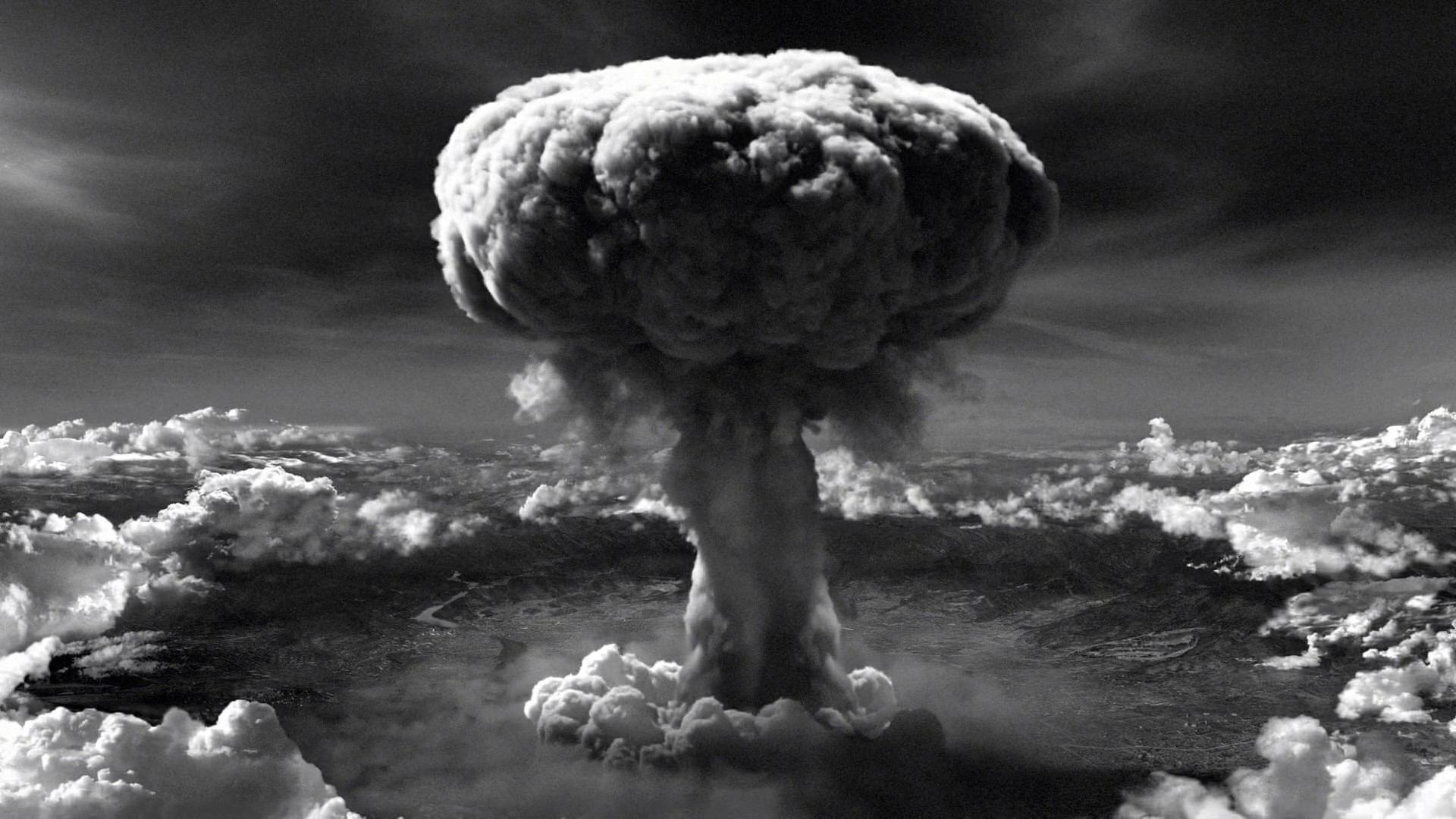
It is interesting how we view violence in the modern world—not different from how we think of the Bomb, a weapon to be stashed and applied as a threat but never to be actually used. In that sense, violence is an ultimate sin; and similar to the bomb, a spectacle so vast and brilliant that it formed the major attraction that led to the creation of the Las Vegas strip, the information economy demonizes violence until it becomes a matter of spectacle. Just as it demonizes those who use violence, it desensitizes the ‘rest’ from truly understanding its destructive power. Violence is only effectively scary when its threat is palpable; when it is simply something occurring on a computer screen, it is reduced to nothing. In essence, it strips violence of all meaning.
The joke here is that ‘violence’ can be replaced with any of the natural human impulses that make us what we are.
And that is the underlying ‘political’ issue that remains unaddressed—that the beast known as the internet4 strips the world of its meaning and reduces human activity to mere individualization. ‘The world owes you nothing’—but that is precisely what societies do! They owe you things! They are structural frameworks through which the things that you have been denied can be obtained by you! It is not a dog-eat-dog world—you are not alone, and the whole reason we invented things like churches and saunas and cities was so that you would not be alone! This structural framework is what the information economy erodes, and when it arrives it arrives with a proclamation of inevitability! It introduces within you the very concepts that it seeks to cultivate—it bombards you with ways of thinking that turn you into Chesterton’s slave—and then presents the resultant illnesses that it induces as problems for you to solve, you and you alone. As things that you must ‘fix’.
freeing the mind, at gunpoint
Whatever understanding was gained from the previous section presents an interesting Catch-22: part of the sell of the information economy is that it places the weight of freeing yourself from its arms on you, while ensuring full well that any of the tools it provides to help you free yourself necessarily ignore the societal component that is innately necessary to ensure success—for things and acts to have meaning they need attributes like ‘causes’, else whatever meaning imbibed into the act is inherently meaningless. But taking prescription medication does not result in the actions of people around you suddenly becoming possible to comprehend. It may alleviate your existential discomforts, your inability to move, to leave your room, to make a phone call, but there is no reason that these newfound abilities solve your fundamental problem.
But then how is it possible to free yourself from the information economy if this drive and desire to free yourself is part of the information economy—indeed, perhaps the very aspect of it that makes it most difficult for you to free yourself? The answer arrives in the form of the lone rebel at Tiananmen Square and the nature of his defiance; from Žižek, again:
Again, this very moment of transparent clarity (things are presented in their utmost nakedness: a lone man against the brute force of the State) is, for our Western gaze, sustained by a cobweb of ideological implications, embodying a series of oppositions: individual versus state; peaceful resistance versus state violence; man versus machine; the inner force of a tiny individual versus the impotence of the powerful machine […] these implications, against the background of which the shot exerts its full direct impact, these ‘meditations’ which sustain the shot’s immediate impact, are not present for a Chinese observers, since such a series of oppositions is inherent to the European ideological legacy. And the same ideological background also overdetermines, say, our perception of the horrifying images of tiny individuals jumping from the burning WTC tower to certain death.
— Welcome to the Desert of the Real, Slavoj Žižek
There is an almost Gödelian paradox here—it is impossible to even determine what an act of defiance against the information economy might be from within the framework of of the information economy. It cannot even be conceptualized, and that is the precise paradox that keeps you within it!
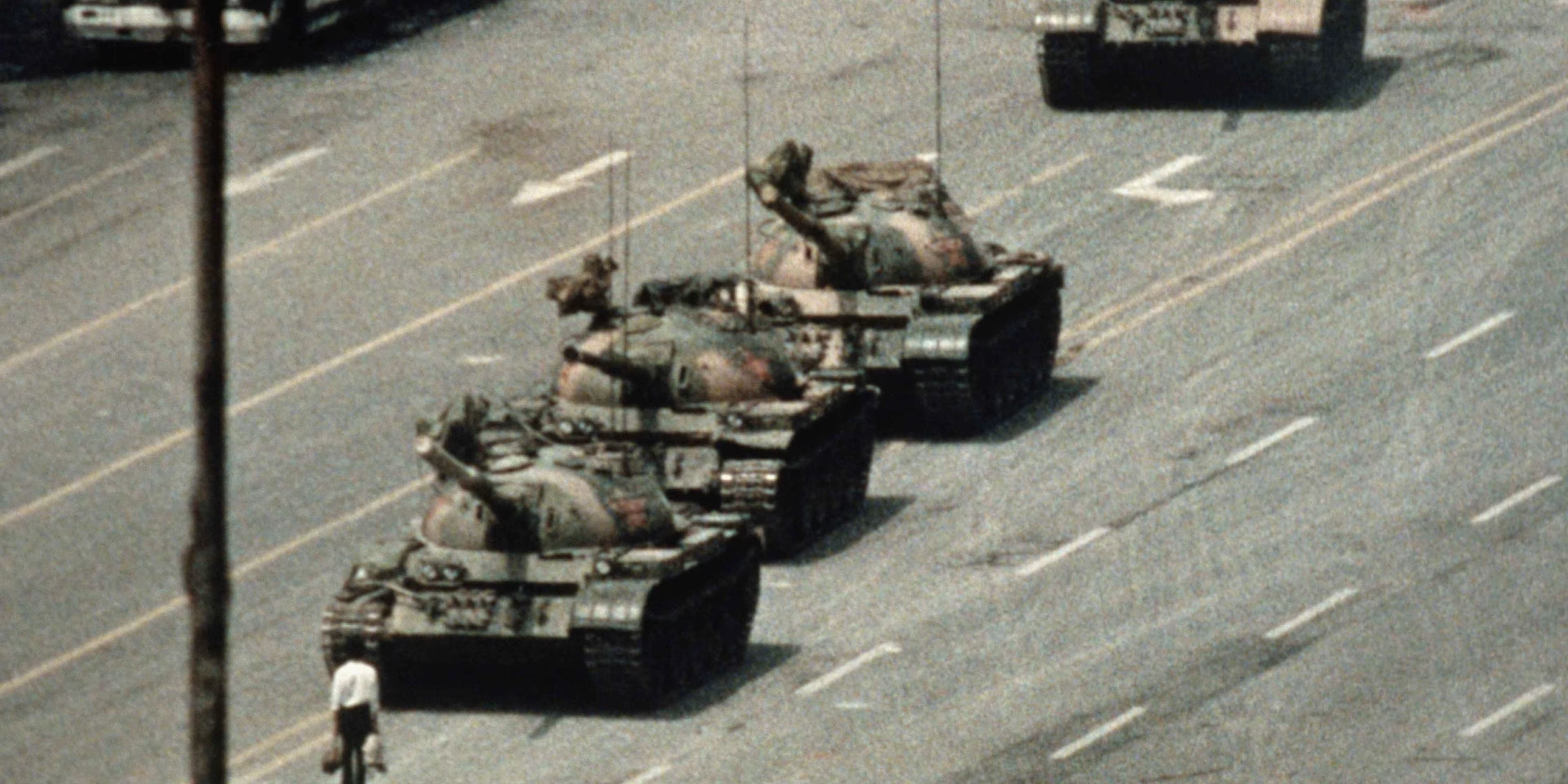
But just as it is possible to understand the lone rebel at Tiananmen Square from a western perspective, it is necessarily true that there exist acts of defiance against the information economy which are comprehensible as such acts from outside it. Here is a way through which a Chinese civilian could ‘understand’ why these images are powerful in the west: by immigrating permanently and spending a long span of years integrating himself into society to the point where the fundamental natures of his thought follow broadly western strokes, he can then view the images through a lens which expresses to him how astonishingly defiant this act looks.
There is no reason the same would not be true of the information economy. By refusing to engage with it—by finding yourself outside it—after many years of redressal, such acts make sense. The mind is a malleable object, and can be retrained, as Gary Harkness and Anatole Bloomberg attempt, through simple and effective acts performed day after day after day for years on end until the misfiring neurons correct themselves into a new, comprehensive whole. Here, in terms of escaping the inherent meaninglessness of existence enforced by postmodernism, the answer is to escape the economy entirely. In essence: stop consuming information entirely5.
There is no ‘hidden secret’. There are no books you can read, no pieces of advice you can follow that will reveal to you the fix to postmodernist malaise. Just pick a thing—a simple, repetitive thing—and do it again and again and again until you are no longer the same person.
the other buddha
At the core of his novel Siddhartha, Hermann Hesse tries to push forward a treatise which is forms a dual to the classical teachings of the Buddha: that achieving a state of nirvana is not something that is exclusive to being an ascetic, but rather something that can be achieved through a variety of means.
The protagonist—a young Brahman by the name of Siddhartha—finds himself in numerous circumstances that lead to unfulfilment, detachment and a gaping hole in his heart, despite doing everything the ‘right’ way: first practicing the arts of the Brahman until he is unusually prolific, then retreating to an ascetic lifestyle until he is a young man. None of these things help. Eventually he encounters the Buddha himself, upon which he is immediately convinced that there in fact is a solution to his problem, and whatever the solution is has been discovered by the Buddha. But he remains unconvinced that it is possible that such a solution can be taught, which forms his divergence from the path of the Buddha’s followers.
Instead, Siddhartha decides to retreat to the world of the living, that Hermann terms Saṃsāra6.
The specifics of how Siddhartha enables this are largely irrelevant, but the vaguest terms are not—what Siddhartha does is simply become a merchant and spend the better part of his youth concerned with making money and gambling. Despite the first twenty or so years of his life having been spent attempting to achieve enlightenment, Siddhartha is able to successfully succumb to hedonism; simply pretending to be a hedonist is enough to transform him into one. It is the old adage of faking it till you make it.
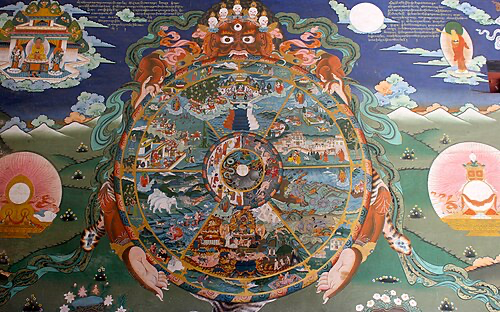
The fact of the matter is this: doing an activity transforms you into the kind of person who does that activity, which brings with it an intense psychological change. Thus, any change—even ineffective—that is an activity that divorces you from the information economy transforms you into the kind of person who is in defiance of it. It is prudent, therefore, to analyze what this cultural baggage is that brings with itself postmodern existence, devoid of meaning—and the answer, of course reaches as far back to 1944 as Adorno’s ‘culture industry’:
Films, radio and magazines make up a system which is uniform as a whole and in every part. Even the aesthetic activities of political opposites are one in their enthusiastic obedience to the rhythm of the iron system. The decorative industrial management buildings and exhibition centers in authoritarian countries are much the same as anywhere else. The huge gleaming towers that shoot up everywhere are outward signs of the ingenious planning of international concerns, toward which the unleashed entrepreneurial system (whose monuments are a mass of gloomy houses and business premises in grimy, spiritless cities) was already hastening. Even now the older houses just outside the concrete city centres look like slums, and the new bungalows on the outskirts are at one with the flimsy structures of world fairs in their praise of technical progress and their built-in demand to be discarded after a short while like empty food cans.
— Dialectic of Enlightenment, Theodor Adorno and Max Horkheimer
The postcapitalist tactics described here have been since modified, transformed in the presence of first television and then the internet into something resembling an all-consuming void that quite literally looks back at you—see Baudrillard, see Wallace!
You no longer watch TV, it is TV that watches you (live),” or again: “You are no longer listening to Don’t Panic, it is Don’t Panic that is listening to you”—a switch from the panoptic mechanism of surveillance (Discipline and Punish [Surveiller et punir]) to a system of deterrence, in which the distinction between the passive and the active is abolished. There is no longer any imperative of submission to the model, or to the gaze “YOU are the model!” “YOU are the majority!” Such is the watershed of a hyperreal sociality, in which the real is confused with the model, as in the statistical operation, or with the medium. …Such is the last stage of the social relation, ours, which is no longer one of persuasion (the classical age of propaganda, of ideology, of publicity, etc.) but one of deterrence: “YOU are information, you are the social, you are the event, you are involved, you have the word, etc.” An about-face through which it becomes impossible to locate one instance of the model, of power, of the gaze, of the medium itself, because you are always already on the other side.
— Simulacra and Simulation, Jean Baudrillard
Television looks to be an absolute godsend for a human subspecies that loves to watch people but hates to be watched itself. For the television screen affords access only one-way. A psychic ball-check valve. We can see Them; They can’t see Us. We can relax, unobserved, as we ogle. I happen to believe this is why television also appeals so much to lonely people. To voluntary shut-ins. Every lonely human I know watches way more than the average U.S. six hours a day. The lonely, like the fictive, love one-way watching. For lonely people are usually lonely not because of hideous deformity or odor or obnoxiousness—in fact there exist today support- and social groups for persons with precisely these attributes. Lonely people tend, rather, to be lonely because they decline to bear the psychic costs of being around other humans. They are allergic to people. People affect them too strongly. Let’s call the average U.S. lonely person Joe Briefcase. Joe Briefcase fears and loathes the strain of the special self-consciousness which seems to afflict him only when other real human beings are around, staring, their human sense-antennae abristle. Joe B. fears how he might appear, come across, to watchers. He chooses to sit out the enormously stressful U.S. game of appearance poker.
But lonely people, at home, alone, still crave sights and scenes, company. Hence television. Joe can stare at Them on the screen; They remain blind to Joe. It’s almost like voyeurism.
— A Supposedly Fun Thing I'll Never Do Again, David Foster Wallace
Is that not the internet—a medium to watch other people doing things? It is nothing but the next manifestation of the capitalist desire to transform its own decline into an object of entertainment, milking more production in the process—production of more of itself, fifth- and sixth-order simulacra, a death-knell to the viewer. There is some nebulous notion of participation, of creation, you can be your own TV show—you no longer even watch attractive people do attractive things, but rather the textual intimation that such a thing is happening is enough.
In Siddhartha, the protagonist’s great revelation is his conscious deference to the absolute oneness of all things, a conscious ‘tapping in’ to his Ātman7 (and that of a great river) that reveals to him the eternal truth of existence—that all existence is meaningful, that there is no duality between life and death, truth and falsity, good and bad, and that things are eternally perfect in the way that they are; that the linearity of time is an illusion, and that all things exist simultaneously in all their forms. This great universal consciousness is like that of the human—no individual cell is aware that it exists, yet the cells combined form a creature with its own consciousness.
This universal human consciousness is given a curious disembodied form via the explicit transmission network of the world wide web, and like all forms of ideological expansion, it both shapes itself into the form of the world and also transforms the world into a form of itself8.

But the key observation is that while the internet is particularly effective at accomplishing this goal, there is no reason why subsequent lack of meaning induced by the information economy is something unique to the internet—it is the culture industry by itself that induces such a notion. Recalling the case of Japanese Anorexia, consider the following: for body image issues to arise, there must be a body and there must be an image. In a world without mirrors, such a disease could never exist! The abnormality of the mirror induces an image, which induces the issues; and indeed, it is not a coincidence that it was the same people who discovered mirrors that also gave rise to bodybuilding—the ancient Greeks.
aphorisms for future yous
What I am saying is stupid and ridiculous. It is not really possible to exist without consuming media in the world today.
But there is no sense in which it is possible to ‘manage’ media consumption without being influenced by it, without being transformed into a slave of the information economy9. And yet there may be slaves, but there still remain degrees to which this slavery takes place. Depending on the degrees to which you cut these things out of your life you reclaim more of your inherent state, though it may find existing in the modern world worrying.
The answer is always the same: visualize the kind of person you would like to become and start doing the actions this person does. Do them every day for 10 years, and you will become that person.
It may seem as if there are more questions to be asked, more answers that are needed. The information economy leaves you always wanting more. But part of the problem is that this ‘more’ is never enough—there is nothing to be found beyond the most banal of aphorisms that form the collective folk wisdom of the same human consciousness that birthed the internet, but distilled to its essence.
Part of the predation that postmodern thought inflicts on your brain is hyperindividualization, destroying any concept of thinking of one as something other than merely the ‘I’, or the Freudian ego. Such is the case of Charles in Bresson’s The Devil Probably, who resorts to suicide upon realization of the fact that he is a very product of the society which he finds sickening.
But this fact is not a downer, but rather a liberation—ignore the strain of hyperindividualization, and forgive yourself. It is not your fault that you turned out the way that you are. It is not even your fault if you are not able to be what you want to be. Your personality, your way of existence are not crimes that you inflict upon the world. The forces which went into determining such a thing are far beyond anything you could cause. Your only fault is your unwillingness to realize your potential as the person you want to be—not even in the failure of the attempt, but merely in the lack of attempt! Forgive and embrace yourself; it is not guilt you should feel, but determination.
Regardless of what you may be doing, there will be failures.
That there are failures is a natural consequence of life, and it must be accepted—if you fail, you are not at fault. I recall this quote from the Star Trek: The Next Generation captain Jean-Luc Picard, speaking to Ensign Wesley Crusher upon his rejection from Starfleet Academy:
It is possible to commit no mistakes and still lose. That is not weakness, that is life.
— Peak Performance, Jean-Luc Picard
It is possible, yes—but it is not weakness. It is not your fault. All it means is to try it again, next time—and if there is no next time, live with no regrets, allowing the totality of the Saṃsāra to make the decisions for you. Maybe you will never succeed. But ultimately, the brunt of failure is not something for you to bear, but for the world.
You go to the gym and train a muscle to abject failure, and nothing happens. Sometimes you go to the gym and you lift less than what you lifted last week. And sometimes you get injured, and you get up, and you can’t do the exercise well, and have to skip the gym. But if you keep going, day in and day out, you will eventually build a worthy physique.
There is nothing different to curing your mental problems. Sometimes you will fail. Sometimes you will be worse than before. Some days are horrible, truly horrific, and you zone out entirely, relapsing into the same behaviors that you tried so hard to rid yourself of. But, ultimately, if you try day in and day out, you will still build a worthy mind that is resistant to what the modern world can inflict upon you. You don’t need to think. You don’t need to doubt. You don’t need to blame yourself. Just do the damn thing. And even if it doesn’t work out, you will still be somewhere where you can be proud of yourself.
There will be bad days. You cannot solve generations’ worth of illness in a day. But take each day as it is, and do what is to be needed—try to be better than yesterday, if you can—and after a year you will find that some days, at least, are not so bad. As you free yourself of the chokehold that modern existence has on you, you will find moments of clarity that teach you more than lessons—even the Buddha’s—ever could.
The quote hung by Gary Harkness’s father on the wall of his childhood room, a quote it took him years and years to internalize.
The fact that things will go wrong is an inevitability. But you cannot control inevitabilities—all you can control is how you face them. It seems, like everything else, to be a banality. But there is a fundamental truth to this sentence. You are given the ability to control how you react to failure, how you react to the world and to your own mind. It has been gifted to you. It is part of your very life itself.
And it is this very ability to control how you react to things that gives you the ability to
no matter what happens when the time comes. And at the end of it—not knowing all the things that have come before and all the things that will come after—the following will, always, always be true.
endnotes
I find, very often, that I am lambasted with accusations of being an Americophile. Although I will always have the sullen defense that I partially grew up around those parts, it is not really a description I would call inaccurate. I am, fortunately or unfortunately, completely obsessed with the United States and its history and culture. Less so with the current era of the country, being what it is, but in that regard I am in some sense beat—like it or not, we all live in the United States today, no matter where our geolocation lies.
This is not my idea. Read the best essay I’ve ever read on sports: David Foster Wallace’s How Tracy Austin Broke My Heart.
The purpose of this is not to suggest that modern psychiatric techniques are ineffective at treating the underlying illnesses, it is to suggest that they have problems in terms of preventing them. It is well-known that schizophrenia and bipolar disorder, for instance, have very successfully been treated with drugs such as lithium and extensive amounts of talk therapy. But despite repeated attempts, psychiatry is no closer to preventing people from developing depression, for instance (which is at record highs) or treating BPD, which is an illness that is well-known to be significantly exacerbated in the absence of stabilizing social relationships and in the presence of the internet; the kicker here being that psychiatry is surprisingly good at being a medical treatment, but is an ineffective solution to fixing people's lives.
There is a lot to be said about why the internet has become so ubiquitous and how the fact that the world pushes it onto you is not some kind of organic process that is the be-end of history, similar to how people constantly push this narrative of ‘technological progress is inevitable’—no it isn’t, the Romans were extraordinarily technologically advanced from about 200BC - 400AD, before this advancement was undone in Europe for the better part of a millennium. Just because we currently reside in the most technologically advanced age in history does not mean that this has always been the case; for a lot of history it just legitimately wasn’t. Always remember—the Bombs may yet fly.
There are people online who shill these digital detoxes, or whatever, which they headline with fancy titles such as I Stopped Using My Phone for 30 Days: This is What Happened. These people are the equivalent of a well-meaning American liberal reading a book about Islam as if it would help him understand the rationale behind 9/11. Obviously, such things do not work, and only lead to trite observations. Bragging about how you have a greater attention span to read books means precisely nothing at all. For the true escapee, opening a cell phone and attempting to view a series of short-form videos is basically incomprehensible; it resembles your aged grandparents squinting at a cell phone and greeting the observation that people spend their whole lives on it with a loud “This is what people are addicted to?”
This is somewhat different from the actual concept of संसार in Vedic literature, which simply refers to the totality of the cyclical world of birth, death and rebirth. The specifics of Hermann’s usage correspond more with the ‘material’ world, in the manner of Madonna’s Material Girl—the world in which people are concerned with things such as wealth or sex, or worldly pleasures.
Literally the Sanskrit आत्मन्, which roughly translates to ‘soul’ or ‘life force’, that persists upon death. In Siddhartha, it is tapped into by the call of holy sound Om (ॐ).
I am reminded of Borges’ Tlön, a fake world included in the history books as a prank that spirals into existence—as the history of Tlön goes from apocrypha to curriculum, the existence of Tlön in the human consciousness gives rise to Tlön becoming reality.
Is this not what the internet does? What television does? Fictional worlds that exist only to entertain, but imprint themselves upon the collective human psyche until the psyche inverts the real world into the fictional. I have said that we all already live in the ‘fictional’ United States that Kissinger exported, but, like a self-fulfilling prophecy, in the very same sense the world that we live increasingly becomes the fictional world on the internet.The contact and the habit of Tlön have disintegrated this world. Enchanted by its rigor, humanity forgets over and again that it is a rigor of chess masters, not of angels. Already the schools have been invaded by the (conjectural) “primitive language” of Tlön; already the teaching of its harmonious history (filled with moving episodes) has wiped out the one which governed in my childhood; already a fictitious past occupies in our memories the place of another, a past of which we know nothing with certainty—not even a that it is false. Numismatology, pharmacology and archeology have been reformed. I understand that biology and mathematics also await their avatars... A scattered dynasty of solitary men has changed the face of the world. Their task continues. If our forecasts are not in error, a hundred years from now someone will discover the hundred volumes of the Second Encyclopedia of Tlön.
Then English and French and mere Spanish will disappear from the globe. The world will be Tlön. I pay no attention to all this and go on revising, in the still days at the Adrogue hotel, an uncertain Quevedian translation (which I do not intend to publish) of Browne’s Urn Burial.
— Tlön, Uqbar, Orbis Tertius, Jorge Luis Borges
There is an irony here in that I am writing these very words on the internet, and that I am the kind of person who has things like ‘fan of literature’ and ‘fan of cinema’ in his bio. But it is an old bit that the people most opposed to drinking alcohol are former alcoholics. You need to be someone addicted to something to realize just how horrific addiction is. There is no one more qualified to speak about how horrific the culture industry is than someone addicted to it.